FTA issues final environmental impact statement for NFTA seven-mile expansion project
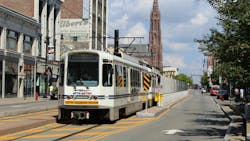
The Niagara Frontier Transportation Authority (NFTA)-Metro Transit Expansion Project has been issued the final environmental impact statement (FEIS) and record of decision (ROD) by the Federal Transit Administration (FTA), marking the end of the federal environmental review process.
NFTA-Metro is proposing to expand high-capacity transit service approximately seven miles from the existing terminus at the University at Buffalo (UB) South Campus to Tonawanda and Amherst, N.Y., including connections to the UB North Campus.
“Completing the final environmental impact statement marks a pivotal moment in bringing the project vision closer to reality,” said NFTA Executive Director Kimberley Minkel. “It’s an exciting step forward that will support economic growth and improve transportation for generations to come.”
Through the environmental review process, alternative options were considered—a no build alternative and two build alternatives, including a light-rail transit (LRT) extension and a bus rapid transit (BRT) line. Based on a review of the environmental, social and economic impacts of the alternatives, NFTA-Metro says it has identified the LRT build alternative as the best option for the needs of the project. The agency cites that LRT provides the fastest travel time, highest ridership potential and greatest economic impact compared to the other alternatives evaluated.
The agency says that the LRT extension will provide a fast and reliable one-seat ride between UB’s campuses while reducing traffic congestion. NFTA-Metro also notes that the project is expected to result in over 11 million fewer automobile miles traveled annually.
The FEIS documents provide measures to mitigate potential adverse impacts where needed. Further, the document reflects input the agency gathered throughout a multiyear public engagement effort, which helped shape the project and inform mitigation strategies identified in the final document.
The agency notes that the project is intended to improve local connectivity and offer new and improved transit access to destinations throughout the region while balancing environmental stewardship and the priorities of the community.
With the conclusion of the federal environmental review process, the expansion project will continue through the federal and local approval processes with construction, phasing and funding strategies further refined as it advances.