Transportation for America report highlights U.S. transit’s lag behind global peers
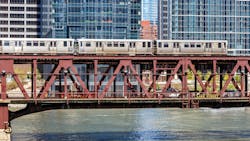
Transportation for America has unveiled a new report, World-Class American Transit, which details the investment that would be required to create world-class transit service in each of the 452 U.S. urbanized areas with populations over 50,000 for the first time. These urbanized areas host more than 230 million people, representing nearly 65% of the U.S. population.
The analysis found that an investment of $4.6 trillion across all levels of government over 20 years, breaking down to $230 billion per year, would be needed to build, operate and maintain a transit network that nears the level of service within a cohort of 17 global cities with world-class transit systems. While that represents what would be a significant increase in current spending, the organization says it still falls short of the $6.3 trillion the U.S. is expected to spend on highways over the same period.
“Americans deserve top-quality transit,” said Smart Growth America President and CEO Beth Osborne. “Right now, most of the country has infrequent, unreliable transit service that doesn’t go to all the places people need to go. Not even New York City reaches the level of the places we studied. But if we triple our investment in transit, every single city over 50,000 people—over 450 communities—can have top-notch transit service connecting them to necessities and opportunity. It just requires a sustained commitment to frequent, reliable transit service and a willingness to stop governing as if Americans should settle for less.”
To establish a benchmark for world-class service, Transportation for America studied a global set of 17 cities and discovered that each urban area’s transit fleet scaled with population, averaging over 130 transit vehicles in service per 100,000 residents. In comparison, the analysis uncovered that on average, American cities operate just 27 transit vehicles per 100,000 residents, offering less than a quarter of the service provided by peers.
To approach the status of world-class transit service over the next 20 years, the report finds the United States would need to:
- Nearly triple the number of transit vehicles in service, investing $180 billion to add roughly 115,000 buses and rail vehicles.
- Invest more than $859 billion to build more than 7,500 miles of dedicated transit right-of-way, allowing service to operate reliably and independently of traffic.
- Running the new expanded vehicle fleet at reliable and frequent levels would require doubling the annual investment in transit operations to $170 billion by 2045.
- To eliminate the existing transit repair backlog and to keep pace with the operation of new services, an additional $403 billion would be required to maintain the new assets acquired in this scenario.
The organization notes that federal policy has consistently prioritized highways, with transit receiving less than one-third of federal transportation spending since 1956. Since the 1980s, the organization says the federal transportation funding has followed a roughly 80/20 split: 80% for highways and only 20% for transit.
“Americans should be able to rely on transit that gets them where they need to go, when they need to be there,” said Transportation for America Interim Director Steve Davis. “Good transit saves families money and provides vital access to jobs, housing and opportunity. We also need dramatic changes in how we plan, build and operate transit, but this report starts to show the level of commitment required to finally deliver the kind of transit Americans deserve.”
While the report’s main focus is on the investment required to reach a new world-class transit benchmark, the analysis also suggests that making this large of an investment in transit would pay for itself in household savings. By modestly reducing the need for car ownership, the organization figures Americans could save more than $5.4 trillion over 20 years, before even accounting for broader economic, environmental and public health benefits a transit push would bring.
The organization says this report establishes a clear benchmark for world-class transit and provides a number to get there, giving decision-makers a target at both the national and local levels. The report does not prescribe a specific funding source. Instead, it sets a credible baseline for the scale of investment needed as lawmakers discuss the next federal surface transportation reauthorization and question the future of the Mass Transit Account.
Future organizational analysis is being designed to build on this foundation by identifying funding options and advancing the policy reforms needed to ensure Americans have transit that is not just better, but truly world-class.