STV completes draft of CHSRA environmental impact report for Los Angeles-Anaheim route
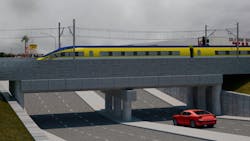
The California High-Speed Rail Authority (CHSRA) has released its Draft Environmental Impact Report and Environmental Impact Statement (EIR/EIS) for the Los Angeles to Anaheim portion of the California High-Speed Rail System. This 30-mile section is being designed to connect Los Angeles Union Station and the Anaheim Regional Transportation Intermodal Center.
STV oversaw the creation of the environmental document, coordinating technical inputs, agency comments and the three-volume release that includes engineering plans and environmental analysis for the CHSRA. The draft showcases intended benefits, including the reduction of vehicle miles traveled in the state by an estimated 1.9 billion. The report also highlights cleaner electric train operations and improved mobility that should be delivered through five new grade separations and stronger multimodal connections.
“This corridor moves more people and goods than almost anywhere else in the country, and this milestone shows how high-speed rail can make that system stronger,” said STV Vice President and Planning Lead Tyler Bonstead. “By building on existing rail infrastructure, we can improve reliability, reduce impacts and deliver better service for millions across Southern California.”
The report shows how the CHSRA and STV see that high-speed rail can operate largely within the existing rail right-of-way, just upgrading stations, tracks, grade crossings and freight links without having to lay an entirely new system. The Los Angeles-to-Anaheim segment uses an existing rail corridor, which means community and environmental effects such as noise, vibration and air quality are expected to be less substantial than they would be with a new rail alignment being constructed in the densely developed area. It also includes plans for new platforms at the Anaheim Regional Transportation Intermodal Center (ARTIC) and possible stations in Santa Fe Springs and Fullerton.
The document outlines mitigation strategies and kicks off a public review process that will run through Feb. 3, 2026. Public hearings are being planned in December and January. A Final EIR/EIS is expected for the project in late 2026.