Fare Collection Upgrades can do More Than Just Change How Riders Pay
Key Highlights
- Phase the rollout—and use the first phase as a beta test: Both agencies avoided a systemwide flip-the-switch approach. St. Louis Metro proved out the model at 11 stations before scaling; COTA moved from account-based ticketing in 2021 to open-loop payments in 2026, giving riders and back-end systems time to adjust.
- Plan for server load before rollout, not after: Both agencies had to redistribute or expand server capacity to handle new validators and dual payment systems — a detail worth budgeting for ahead of launch rather than fixing after go-live.
- Vendor timelines, not agency ambition, often set the pace: COTA's Yanni noted the biggest rollout challenge wasn't technical readiness on their end but coordinating with third-party vendors serving multiple agencies simultaneously — a bottleneck likely to recur as more agencies pursue similar upgrades.
- Change management matters as much as the technology: Both agencies emphasized meeting riders where they are—through patient communication, retail load networks for un-banked riders and features like Family Fare Share—rather than forcing an abrupt switch.
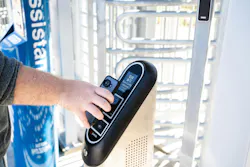
When transit authorities upgrade aging hardware and systems, the easy move would be to flip the switch to enable and hope. The Bi-State Development Agency of the Missouri-Illinois Metropolitan District (St. Louis Metro) and the Central Ohio Transit Authority (COTA) did the opposite. Over roughly three years and, in St. Louis Metro's case, three deliberate phases, riders got bureaucratic sounding upgrades that produced improved systems: ones that makes platforms more secure in St. Louis and payments easier to complete in Central Ohio.
Both upgrades, at the end of the day, also come with quality of life improvements for riders, now hosting features like tap to pay and fare capping and as a means to recover revenue lost to fare evasion. However, these projects didn’t pull single duty; they were deliberate, multi-pronged moves that improved the quality of the overall systems.
St. Louis Metro: A security upgrade that improved fare collection
St. Louis Metro was in search of a security upgrade for its transit system. That need led to the agency's development of the Secure Platform Plan, a yearslong effort to convert St. Louis Metro from an open-platform system to a closed-platform one. St. Louis Metro began designing the project in 2022, when the system's crime rate was 17 incidents per 100,000 riders, according to St. Louis Metro Public Affairs and Security Executive Vice President Kevin Scott. Rather than installing everything systemwide and enabling all the new hardware at once, the agency rolled the plan out in three phases.
The project included upgrading each station to host fencing, platform gates and other assorted measures to ensure platform access was only granted to paying riders—while also upgrading their fare-paying experience. It opted for a phased approach to ensure that the system would be cohesive and reliable, with all of the issues worked out in the initial phase—treated like a beta test.
“Our overall effort initially had a security focus, and so relative to the securing of our MetroLink platforms with security gating and the fencing, we did a robust reconfiguration and upgrade of our closed-circuit television system and tied that into a real-time camera center,” Scott said. “Obviously, that was the priority, and we certainly realize that the very basis of overall security is fare integrity.”
Now, all 38 free-standing stations in the system host autonomous platform gates tied into the fare collection system that meters platform access—something the agency wouldn’t have been able to do with the previous fare system. The 39th station, located at the Mid-America Airport, is set to go online later in 2026.
“With the legacy fair product that we had in place, we weren't able to communicate with the gating systems that we were putting in, [as] an autonomous operation of gates would not have been possible,” Scott noted.
That new fare collection system allows St. Louis Metro passengers to have features like tap to pay via a smart device or smart card, fare capping, integration with the Transit app—as well as the agency’s own RideOn! app and Family Fare Share, a feature that allows a family administrator to manage the smart cards/apps and combined balance of an entire family through one account.
This is being driven with validator hardware from Masabi, paired with ticket vending machines (TVMs) and a new mobile platform to ensure that any rider can purchase and validate fare. Scott says now that all of these systems have been installed, integrated and activated, customers have made the adjustment well.
Funding for the project came in the form of a public-private partnership, guided by St. Louis Metro CEO Taulby Roach. Over $10 million of project funding for the Secure Platform Plan came through private donations while the rest was filled in by the agency’s public funding partners—the city of St. Louis, St. Louis County and St. Clair County, Ill. HNTB was awarded the design contract for engineering services, which was funded through existing grant money and federal stimulus funds.
Scott notes the agency saw a 40% reduction in incidents at the initial 11 stations when the new securement system was being stood up and says these upgrades protect the rider experience, like in keeping incidents that started outside of stations off of the platforms and away from St. Louis Metro property.
St. Lous Metro was able to create this tightly integrated system because the need to upgrade in each area had come due.
“In order to do what we needed to do relative to having those gates work, we had to make the investment in everything,” Scott said. “It was timely because we were in need of a complete upgrade relative to our fare product, and so we were able to do both with the security priority and then implementing, what we feel, is a very effective fare collection hardware—from the type of vending machines that we're using to the validators that we're using.”
While the agency reported some initial bugs—like having to redistribute the load of the validators on its servers—it’s stabilized and is going smoothly now.
The road to get to that end game wasn’t an identical one from station to station. As the stations all sit in different geographies, the agency couldn’t take a one-size-fits-all approach to platform securement, though it also didn’t want to start changing the geography to accommodate such an upgrade, either.
For other agencies looking to make an upgrade, Scott offered a word of advice.
“Do not waste an opportunity or under score the security priority. Don't just put in fare gates, put in a security gated system that integrates with your fare collection system,” Scott said. “You usually get one chance of doing it and one chance of doing it right, so don't make the mistake of understating the security priorities.”
COTA finalizes major fare collection overhaul and builds out new integrations
COTA launched the first phase of its fare collection upgrade at the end of 2021, bringing account-based ticketing (ABT) to its services through a partnership with Masabi and Transit app. This provided users with more ways to purchase and store fares and gave riders features like fare capping.
It also was a move in an effort to make the system more equitable, as riders that paid with cash and couldn’t front the cost of a monthly pass, paid the most under the old system. Further, COTA built out a network of retailers where under- or un-banked riders could load funds to still be able to access the digital products and receive the benefits of fare capping.
At the beginning of 2026, COTA and Masabi launched the next phase of the upgrade—open loop payments. This step allows riders to pay with a tap-capable debit or credit card or with their mobile wallet on a smart device while still keeping smart cards and the mobile app experience. This phased approach follows that of other agencies, like the Denver Regional Transportation District, which also started with ABT before adding open loop payments in a later phase.
Now that the open-loop phase of the upgrade is complete, the agency is already seeing steady adoption, with COTA Project Management and Innovation Senior Manager Jason Yanni noting his observation of the upgrade as he moves through the system.
“It’s satisfying,” Yanni said. “I think that we are moving in the right direction. We do have the ABT that we did in 2021 and now tap to pay open loop payments, but we still have some ways to go with some education and some of our ridership still holding on to the old way of doing things.”
While Yanni notes that some riders began using the new feature before it was even widely publicized just from seeing the tap to pay symbol, he emphasized having patience while making such an upgrade. The agency sought to meet its ridership where it was at, trying not to make the upgrade feel like a force switch, or like “ripping off a band aid.”
As for the phased implementation in this project, Yanni said that while it was partially because the technology wasn’t ready from their preferred vendor yet, they also wanted to take it slow, though by the time it was ready, so were their riders.
“When their technology got ready, we weren't the first adopters, but we were very close to the front because we knew that we wanted it, and our passengers started to ask about it because they wanted it simplified as well,” Yanni said.
Similarly to St. Louis Metro, COTA had some server work to do so the upgrade went smoothly, ensuring it had enough capacity to process both open loop payments and payments from its smart cards.
The most challenging part of the rollout, according to Yanni, came down to the fact that—much like the shift to zero-emission vehicles—many agencies nationwide are making similar fare collection upgrades at the same time, putting them in lines with the vendors that provide the solutions as demand contends with capacity.
“The hardest part is coordinating with your external vendor on timelines that you want versus what they are developing towards,” Yanni said. “We don't have a lot of control over what the third-party vendors do in public transit.”
Yanni continued, noting that delays in other implementations could delay its own, impacting how customer communications may go out, though he also noted this wasn’t unique to this project, but rather was the nature when working with technology upgrades like this.
Now that the open loop system is up and running, COTA Product Manager Dani Sisson, who manages the agency’s relationship with Masabi, noted that the ridership is transitioning to the new system steadily.
“We've consistently gone up 1% month over month since we launched in January—of Masabi ridership. We have not seen those numbers go down. It's just been a nice steady increase,” Sisson said. “The adoption is not a huge surprise overall, and we're excited to see those numbers just month over month increase.”
Further, the agency is exploring expanded options for under- and un-banked riders, having conversations with major card payment processors and money sending and receiving platforms in an effort to bring more options to riders. Yanni notes the agency wanted to do this for two reasons:
- Provide the features the fare collection system offers.
- There would be a greater ability to protect fare balance in the event of a lost or stolen device or smart card, instead of it just being gone like if it were cash.
Additionally, Yanni notes that it’s working towards making its TVMs a point to load fare into the Masabi system, instead of just vending passes.
Beyond ABT and open loop payments, the agency also launched an integration into the mobile app of The Ohio State University (OSU), allowing students to scan in for rides directly from the university app instead of going off platform, as a feature of the student activity fee. The partnership also married the campus bus system’s GTFS feed with that of COTA’s, providing a unified experience to track buses across the complementing systems. Since launching the integration for the fall semester near the end of August, already 30% of the OSU traffic is coming from the app instead of the old Buck ID system.
As the upgrade hums along, Yanni reminds other agencies of the customer when undertaking such an upgrade.
“You're doing the technology—yes, it gives you some financial benefits on the back end for you as a transit agency, but you've got to focus on your customer base,” Yanni said. “Plan for your customer base on how much change you think they can absorb in the time period that you want to try to get this rolled out—and listen to them.”
About the Author
 Noah Kolenda
Noah Kolenda
Associate Editor
Noah Kolenda is a recent graduate from the Craig Newmark Graduate School of Journalism with a master’s degree in health and science reporting. Kolenda also specialized in data journalism, harnessing the power of Open Data projects to cover green transportation in major U.S. cities. Currently, he is an associate editor for Mass Transit magazine, where he aims to fuse his skills in data reporting with his experience covering national policymaking and political money to deliver engaging, future-focused transit content.
Prior to his position with Mass Transit, Kolenda interned with multiple Washington, D.C.-based publications, where he delivered data-driven reporting on once-in-a-generation political moments, runaway corporate lobbying spending and unnoticed election records.