Mesa County Commissioners approve grant to fund zero-emissions technology study
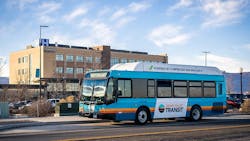
In Colorado, the Mesa County Commissioners approved a $100,000 grant agreement to study how Grand Valley Transit can continue transitioning to zero-emission vehicle technologies while building on the clean-fuel system already in place.
According to Mesa County, the study will be funded primarily through $90,000 in Clean Transit Enterprise funds awarded by the Colorado Department of Transportation’s Division of Transit and Rail, with a $10,000 local match that is already budgeted in the 2026 adopted budget. The local share is paid through the Grand Valley Transit intergovernmental agreement.
The Mesa County Regional Transportation Planning Office applied for the grant and will oversee the Zero-Emission Vehicle Transition Study, which will help the county and Grand Valley Transit better understand what already qualifies as zero-emission in the local transit system and what options make sense moving forward.
The study’s focus will include:
- Evaluating current vehicles by determining how many in the existing compressed natural gas fleet can already be considered zero emission due to renewable natural gas.
- Expanding renewable fuel use by exploring opportunities to increase renewable natural gas production and use within the transit system.
- Reviewing emerging technologies through a high-level assessment of options such as battery-electric buses, vans or hydrogen fuel-cell vehicles, where appropriate.
According to the county, a significant amount of Grand Valley Transit’s renewable natural gas comes from captured methane at the Persigo Wastewater Treatment Facility. Instead of being flared into the air, that gas is used to fuel transit buses, making it a net-zero emission source.
Completion of the study will position Mesa County and Grand Valley Transit to compete for additional state and federal transit grants that require a formal zero-emissions transition plan. It also expands the number of funding sources available to support transit services in the Grand Valley.
The study does not require Mesa County to purchase electric buses or change its current fleet strategy. The county notes battery-electric buses, while improving, remain more expensive and have range limitations that can require additional vehicles to maintain service levels. Renewable natural gas has allowed Grand Valley Transit to modernize its fleet while remaining competitive for low- and no-emission grant programs.