Propane transit buses help rural Minnesota Indian reservation thrive
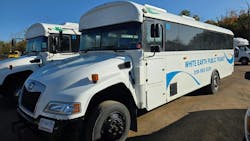
In Northwestern Minnesota, White Earth Public Transit sought alternative fueling options to reduce fuel costs and improve the reliability of services to residents of the state’s largest Indian reservation in one of the most rural and coldest regions in the state. It began exploring propane autogas as a fuel source.
“We have many propane suppliers in our area, so we did some research on the propane fuel option and thought we would try it,” said White Earth Public Transit Manager Kenneth Bakken. “We tried conversions first.”
The transition to propane through conversions began nine years ago, but after a few months, the transit agency went all-in on purchasing new propane vehicles through the support of grant programs. To make the full transition to propane, the agency relied on industry experts to provide resources and support.
“We knew that we wanted someone who could provide support once we took a chance on it,” Bakken said. “We found ROUSH CleanTech from our bus vendor, North Central Bus of St. Cloud.”
Through on-the-ground support and training, ROUSH CleanTech helped White Earth Public Transit transition to propane autogas buses. After learning more about how the technology powering today’s propane vehicles is similar to gasoline engines, the agency determined propane buses were a viableoption for their community.
“We liked the autogas technology because we wanted something that would be similar to fuel at a gas station, which makes the drivers more comfortable but safe as well,” Bakken said.
Plus, with a large selection of propane providers in the area, Bakken could be certain the fuel supply would be readily available.
With its six propane buses, White Earth Public Transit achieved its goal to lower fuel costs, with per-gallon propane prices approximately $1 less than gasoline.
“We don’t run diesel buses anymore because the cost was too high,” Bakken said. “Gas is cheaper [than diesel] but also getting high. Propane is the cheaper option, and we don’t have the fuel repairs like before.”
The propane vehicles have allowed the agency to better maintain operations year-round because propane vehicles have no cold-start issues and warm up quickly, which means they are saving time and money on equipment and staff throughout Minnesota’s harsh winters.
“In the winter, temperatures typically stay below zero for weeks at a time,” Bakken said. “We often see temps as low as negative 40°F to negative 50°F, but I find no issues in the winter with propane, and we have been using it for years.”
When considering other fuels, propane’s winter weather performance stood out against electric.
“There’s limited infrastructure for electric vehicles (EV) in rural areas, and the lithium batteries cannot stand up to our cold climates,” said Bakken. “This turned us away from EV and led us to propane.”
According to Bakken, the transit agency’s fueling station is outside, so the buses are fueled in Minnesota’s frigid temperatures and that drivers appreciate the level of comfort and familiarity with the propane vehicles.
“With propane, the engines start within 10 seconds and the cabins warm up within 15 minutes,” Bakken said. “Drivers drive their propane buses just as if they were a gas bus.”
In recent years, White Earth Public Transit has secured multiple federal and state grants to support its operations, expand and modernize its bus fleet and construct a new transit facility. These grants, including those from the Federal Transit Administration (FTA) and the Minnesota Department of Transportation (MnDOT), have helped the agency secure updated, clean-operating propane buses through their Low or No Emission Vehicle (Low-No) and Carbon Reduction programs.
Since propane is classified as an alternative fuel by the U.S. Environmental Protection Agency. There are incentive programs to encourage adoption. The ROUSH CleanTech Ford E-450 cutaway chassis has completed the FTA’s New Model Bus Testing Program (Altoona Testing), which allows a transit fleet operator to access federal funds that cover 80-85% of entire alternative fuel vehicle cost, with a 15-20% local match. The ROUSH CleanTech Ford E-450 — the model operated by White Earth Public Transit — meets all federal Buy America standards, making it easier for fleets to be eligible for federal purchasing programs.
In 2025, White Earth Public Transit began construction on a new 18,000-square-foot transit facility through the support of the FTA and MnDOT funding programs. When complete, the facility will be the largest tribal transit facility in Minnesota. It will include bus maintenance garages, a dispatch office and driver facilities, which will improve the agency’s operational efficiency and safety to better meet the needs of the community.
White Earth Public Transit has had such success with its propane buses that it plans to operate a 100% propane fleet by 2028.
About the Author
 Todd Mouw
Todd Mouw
Executive Vice President of Sales and Marketing
Todd Mouw is executive vice president of sales and marketing for ROUSH CleanTech, an industry leader of alternative fuel vehicle technology. Mouw has served as president of the NTEA Green Truck Association.