Best Practices: Managing a mixed fleet
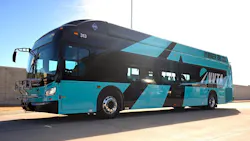
Managing a mixed fleet of compressed natural gas (CNG), battery-electric buses (BEBs) and soon hydrogen fuel-cell electric buses (FCEBs) isn’t something coming down the road; it’s already here for Victor Valley Transportation Authority (VVTA).
VVTA operates in the high desert region of San Bernardino County in southern California. With a fleet of 130 revenue vehicles, VVTA operates fixed-route service, demand response, commuter bus and microtransit. The agency’s fixed-route fleet consists of 12 BEBs, 13 FCEBs and 49 CNG buses. Managing a diverse fleet of mixed fuels requires training, data, communication and infrastructure.
Fueling infrastructure is different for all three types of fuel. CNG is compressed on site via three compressor skids. Hydrogen is planned for liquid delivery with an existing interim gaseous solution. Electricity is dispensed via plugin charging stations at 100kw. Shop and facility upgrades were required to add hydrogen to an existing CNG fleet. Gas detection is required for both methane and hydrogen, and flame detection is also required for hydrogen.
Technicians need to be knowledgeable and trained to work on each of the fuel types. High voltage systems on BEBs and FCEBs need technicians to be qualified and require strict safety practices, standard operating procedures and proper personal protective equipment use aligned with NFPA 70E. The CNG side still needs to stay current with inspection standards like CGA C-6.4. Utilizing original equipment manufacturer (OEM) training is a must, but fully relying on the OEM is not the best approach. VVTA utilizes organizations like the California Transit Training Consortium, works with its industry partners and has a train the trainer approach; the balance between cross-training and specialization makes a big difference.
Maintenance strategies also must adjust as zero-emission buses are not like CNG buses. BEBs, for example, don’t do well sitting dormant. If a bus is down, a plan is needed to cycle it, monitor battery health and document what’s happening to minimize problems down the line and reduce out-of-service times. Hydrogen adds another layer with a fuel cell system that requires monitoring fuel economy to help determine when to maintain and rebuild systems.
For data, VVTA is using a dedicated zero-emissions platform to monitor both BEBs and FCEBs. This pulls data from the vehicle telematics systems, infrastructure and the CAD/AVL systems on every bus. The information received includes everything from state of charge and FCEB fuel economy to fault codes and charging status. The issue isn’t getting the data; it’s having an overabundance of data, trusting it and knowing what to do with it.
Each vehicle type has a different range, and fueling times differ greatly. BEBs and FCEBs don’t have nearly the amount of range of a CNG bus. BEBs also can take a significant amount of time to charge—upwards of eight hours—as opposed to FCEB and CNG buses being fueled within a few minutes. The key to making it all work is managing the range using data to find the best routes and pull times that each type of vehicle can be placed on.
VVTA doesn’t design service around the limitations of a vehicle, though. Instead, routes are built around the customer, and that doesn’t change just because of the limitations of the vehicle type. What changes is how the fleet is deployed. You must be strategic about where those buses go while keeping enough flexibility, so operations can adjust when needed. Some routes are more demanding, and you plan for that, but the goal stays the same: consistent, reliable service.
With the range limitations of BEBs and the high costs of hydrogen fuel, how the bus is driven matters. Regenerative braking has a direct impact on range and performance. Improving range and fuel economy helps, with a focus on training drivers to be conscious of regenerative braking, smooth acceleration, controlled braking and understanding how the bus responds. Communication and documentation tie everything together. When operations and maintenance are aligned and sharing information, you start to see real improvements and fewer issues.
Managing a mixed fleet isn’t simple, but it’s manageable if you stay disciplined and positive. Align your facility, train staff, develop and follow SOP’s, adjust your maintenance approach and keep your focus on the customer.
About the Author
 Richard Montgomery
Richard Montgomery
Fleet & Facilities Manager, Victor Valley Transportation Authority
Richard Montgomery is the fleet and facilities manager for Victor Valley Transportation Authority.