Hudson County tasks Nelson/Nygaard to conduct BRT feasibility study in cities of Bayonne, Jersey City
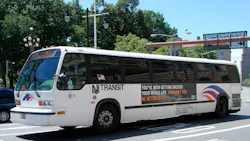
The Hudson County Board of County Commissioners has awarded a contract to Nelson/Nygaard to conduct a bus rapid transit (BRT) feasibility study along John F. Kennedy Boulevard in the cities of Bayonne and Jersey City, N.J.
“This is a major step forward in delivering on our Vision Zero commitments,” said Hudson County Executive Craig Guy. “I thank the board of commissioners for their support in moving forward on this study, which prioritizes public safety while expanding transit options that are safe, reliable and inclusive. As chairman of the Vision Zero Task Force, I am proud to see this study advance on one of the most critical, county-owned roads. This study is a meaningful step to make Hudson County a safer, more connected place for everyone. The results will guide future investments in transit infrastructure, bringing faster bus services, safer streets and expanded mobility options, and I look forward to engaging with [New Jersey Transit] NJ Transit, municipalities, advocates, bus users and other partners on this project.”
Nelson/Nygaard will be supported by TYLin. The county says the firms bring nationwide experience in designing and implementing BRT and bus-priority systems that improve speed, reliability and safety.
The feasibility study will include:
- Reviewing existing roadway and transit conditions.
- Executing traffic modeling and analysis on the impacts of bus ridership and parking.
- Developing recommendations for priority corridors and infrastructure improvements.
- Creating alternative concepts for potential street designs.
- Providing guidance on next steps, including funding prospects.
Hudson County will work closely with NJ Transit to ensure the study aligns with future transit operations. The Department of Planning and Business Opportunity will manage the project in coordination with the Division of Engineering. The board of county commissioners previously approved $150,000 from the Capital Improvement Fund to support the study, which will have a one-year term with an expected nine-month work schedule and final draft in early 2027.
The county plans to provide several opportunities for the public to weigh in at different stages of the process, including virtual and in-person options.