The Nonattainment Area Air Pollution Mitigation Enterprise (NAAPME) Board has formally approved a $50 million capital allocation and an ongoing $2.7 million annual maintenance commitment to build and maintain 74 bus rapid transit (BRT) stations along Federal Boulevard in Colorado.
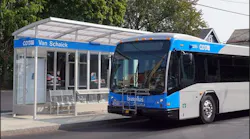
According to the Colorado Department of Transportation, the funding targets one of the region’s busiest transit corridors, supporting transit improvements along Federal Boulevard between 120th and Dartmouth avenues. The capital funds will construct 74 station platforms equipped with glass windscreens, protective canopies, real-time arrival displays, ticket vending machines, emergency call boxes and pedestrian lighting. Construction is scheduled to begin in fall 2027. When complete, the BRT is expected to provide reliable, high-frequency bus service along 18 miles of Federal Boulevard.
“We are excited that the enterprise can make such a significant investment in cleaner travel options along one of the busiest corridors in the nonattainment area,” said NAAPME Board Chair Kristin Stephens, who also serves as a Larimer County commissioner. “Delivering high-quality transit access and cleaner air are central to our mission, and this investment will take a significant step toward better air quality.”
Construction will occur in two phases. Phase 1 will cost $19 million and covers 28 stations between 52nd and Alameda avenues, with construction scheduled to begin in fall 2027. Phase 2 will cost $31 million and covers the remaining 46 stations, with construction anticipated to begin in summer 2028.
The funding also provides dedicated corridor-wide maintenance starting at $1 million in fiscal year 2029 and scaling to $2.7 million annually. Funds will support routine and long-term upkeep, including platform cleaning, graffiti removal, snow and ice clearance, shelter maintenance and capital repairs.
The BRT line is projected to:
- Decrease daily traffic along Federal Boulevard by an average of 7%, with localized reductions reaching up to 20%.
- Cut peak-period vehicle miles traveled by 9% to 10% and reduce travel times by 15%.
- Reduce ozone causing emissions by approximately 14 tons and particulate matter by 28 tons annually from transportation activities.
- Eliminate 134,800 metric tons of greenhouse gas emissions between 2030 and 2050.
- Boost corridor transit ridership 2.3 times, to over four million annual trips by 2045.
- Upgrade 57 intersections to enhance safety for pedestrians and transit riders alike.