MDOT MTA to start RAISE East-West Transit Priority Project construction Oct. 6
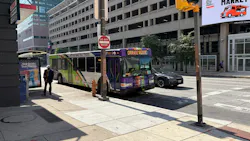
The Maryland Department of Transportation Maryland Transit Administration (MDOT MTA) revealed that construction of the Rebuilding American Infrastructure with Sustainability and Equity (RAISE) East-West Transit Priority Project will begin Oct. 6. The $50 million investment, which includes a $22 million federal RAISE grant supported by members of Maryland’s Congressional Delegation, is designed to transform a 20-mile stretch along Baltimore’s CityLink Blue and CityLink Orange corridors—in an effort to make daily travel to jobs, health care, school and life’s opportunities faster, safer and easier for everyone.
“Building the new East-West Transit Priority Project means we are creating more pathways to work, wages and wealth by providing safe, reliable transportation for Marylanders in Baltimore to thrive," said Maryland Gov. Wes Moore. “Whether it be transportation to your kid’s school, the nearest grocery store or a new job, our administration is dedicated to building the necessary infrastructure to connect Maryland communities to opportunities, ensuring no one is left behind.”
The project aims to put community priorities front and center in an effort to improve mobility, safety and quality of life along the corridor. The RAISE East-West Project seeks to deliver real, tangible improvements that riders will experience now while building momentum for Baltimore’s long-term transit future.
“The RAISE East-West Transit Priority Project is an example of the Moore-Miller Administration leveraging federal, state and local funding to create more efficient, safe and reliable transportation opportunities,” said MDOT Secretary Katie Thomson. “Starting construction on this project is a monumental step as we work to better serve and support customers traveling across Baltimore.”
What’s coming
- Faster bus trips: Upgraded traffic signals that give buses priority and lane curbs to keep buses moving on schedule.
- Safer streets: New crosswalks, accessible sidewalk ramps and better lighting at bus stops. Better bike connections: An upgraded bicycle connection between Downtown Baltimore and the West Baltimore Maryland Area Regional Commuter rail station.
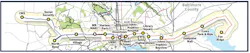
“The MTA’s $50 million RAISE East-West grant represents a transformative investment in Baltimore’s transit network,” said Baltimore Mayor Brandon Scott. “The project’s core priorities, including dedicated bus lanes to improve reliability, enhanced boarding areas to increase rider safety and expanded accessibility, directly align with my administration’s goal of building a safer, more connected and more accessible city for all Baltimoreans.”
Work will happen in stages in an effort to help keep neighborhood disruptions to a minimum and maintain access to homes, businesses and transit services. Crews are set to work mostly during weekday daytime hours, with the occasional evening or weekend work when necessary. Most upgrades to bus stops will take about three to five days per location.
“The RAISE East-West Transit Priority Project represents a significant investment in improving mobility, safety and accessibility for Baltimore communities,” said MTA Administrator Tony Bridges. “These improvements will help make transit more reliable while enhancing connections for people walking, biking and using transit every day.”
About the Author
 Noah Kolenda
Noah Kolenda
Associate Editor
Noah Kolenda is a recent graduate from the Craig Newmark Graduate School of Journalism with a master’s degree in health and science reporting. Kolenda also specialized in data journalism, harnessing the power of Open Data projects to cover green transportation in major U.S. cities. Currently, he is an associate editor for Mass Transit magazine, where he aims to fuse his skills in data reporting with his experience covering national policymaking and political money to deliver engaging, future-focused transit content.
Prior to his position with Mass Transit, Kolenda interned with multiple Washington, D.C.-based publications, where he delivered data-driven reporting on once-in-a-generation political moments, runaway corporate lobbying spending and unnoticed election records.