City of Seattle launches Denny Way Bus Reliability Project
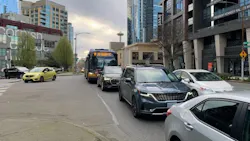
The city of Seattle has launched the Denny Way Bus Reliability Project, which will extend the eastbound red bus lane along one mile of Denny Way to help buses move more freely through the corridor.
“I promised we would move quickly to make transit move more quickly, and that’s exactly what we’re doing,” said Seattle Mayor Katie Wilson. “I’ve been one of the Route 8’s 8,000 daily riders, and I know how frustrating it can be when buses are stuck in traffic–and you’re stuck wondering if you’re ever going to get to your destination. That’s why I’m so excited to be rolling out nine blocks of red carpet for transit riders on Denny Way.”
The Seattle Department of Transportation (SDOT) developed the design and will deliver new eastbound business access and transit (BAT) lanes in two phases this year, giving priority to buses while allowing access for turns and deliveries.
According to the city, Denny Way is a key east–west connection that links Downtown, South Lake Union, and Capitol Hill. It currently serves buses, freight and regional trips within limited street space. Route 8 carries approximately 7,000 riders each day and is one of King County Metro’s top 10 routes by ridership, though it has struggled with reliability, particularly along Denny Way, where buses are delayed by heavy congestion—especially eastbound in the afternoon.
Phases of the project
Phase 1 (West End – Planned for May 2026)
The first phase includes three blocks of eastbound bus lanes from Queen Anne Avenue North to Second Avenue at the west end of the street serving riders on seven routes–the 1, 2, 8, 13, 24, 33 and the RapidRide D Line–carrying nearly 26,000 riders daily. This phase also extends an existing southbound bus-only lane on Queen Anne Avenue to Denny Way and adds a bus queue jump at Second Avenue to help bus riders move ahead of traffic at the intersection. The agency notes that these improvements are designed to help buses move more smoothly through congested intersections and streets.
Phase 2 (East End – Planned for August 2026)
Additional improvements are planned east of Fifth Avenue, including an extension of the eastbound bus lane and intersection changes to better support transit operations along the corridor.
This phase includes the following:
- Installing nine blocks of new BAT lane from Fifth Avenue to Fairview Avenue North in the eastbound direction.
- Shifting the eastbound bus lane between Fairview Avenue and Stewart Street to a curb side bus lane.
- Restricting turns at select locations, including eastbound left onto Dexter Avenue and right onto Yale Avenue and westbound left turns onto Lenora Street and Boren Avenue.
- Closing the Yale Avenue slip lane where right turn is restricted.
- Reconfiguring the intersection at Lenora Street and Boren Avenue to enhance pedestrian safety.
SDOT is also identifying additional corridors where similar transit-priority improvements could deliver high-impact benefits for riders and the city, with plans to advance this work through the Levy-funded Transit Spot Improvement Program.
“[King County] Metro is grateful for the support of our Seattle partners as we move forward with making Denny Way work better for bus riders on Route 8,” said King County Metro General Manager Michelle Allison. “Helping buses move faster on busy city streets is a critical part of making transit a reliable and top choice for getting around town. We look forward to cutting ribbons this spring and summer and rolling out more red carpets for the 8 when work is complete.”
SDOT will also fund additional bus trips on the Route 8 via the voter-approved Seattle Transit Measure (STM), beginning in late August, and continue to partner with the agency to promote transit, walking, biking and rolling in the South Lake Union neighborhood. These additional bus trips are part of a comprehensive set of investments made possible by the STM, which expires in early 2027. The STM invests in local bus and streetcar service to, according to the agency, make public transportation better, more reliable and more accessible for everyone in the city.