Stantec, Saunders Construction design-build team completes Glenwood Springs Maintenance Facility
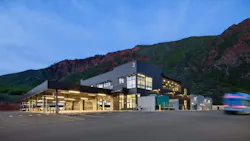
Work has been completed on the Glenwood Springs Maintenance Facility (GMF) for the Roaring Fork Transportation Authority (RFTA). The $68 million project was carried out by the design-build team of Stantec and Saunders Construction. Together, the firms note they led the design-build services, including architecture, industrial architecture, sustainable design, interior design, lighting design and fueling design (diesel, compressed natural gas and hydrogen ready), as well as mechanical, electrical and plumbing engineering and project management/construction.
The design-build team notes that the expanded GMF now provides heated indoor storage for 60 buses and a 9,000-square-foot second level operations space with a dispatch suite, reception area for visitors, drivers’ room, office space and locker rooms. It also includes an additional fuel and wash lane added to their existing facility. The design-build notes that the design of the facility offers an integration of functionality, sustainability and user experience through natural lighting and climate-controlled spaces while blending the facility into the colors of the surrounding mountains. The facility also hosts support for zero-emission upgrades, including four battery-electric bus charging stations and was designed to accommodate expansion to hydrogen fuel cell electric buses.
“The GMF expansion has been a critical project for the growing population of Pitkin and Garfield counties and the surrounding areas,” said Stantec Senior Principal Merlin Maley. “We are excited to see its doors open to the public and improve the reliability and efficiency of RFTA’s operations while also reducing fossil fuel emissions.”
Needed site improvements were designed to address the mountainous terrain and operational needs of the transit agency. The design-build team notes that the project included the construction of substantial site retaining walls to stabilize steep topography and create level ground for bus circulation and parking. Landscaping was designed to blend the facility into its natural surroundings, enhance visual appeal and support local environmental sustainability goals.
Addressing operational deficiencies, the expanded facility was designed to accommodates public transportation needs, according to the design-build team. This includes growth in population and ridership demand while contributing to the RFTA’s transition to zero-emission buses. Previously, buses were stored outdoors, resulting in additional operational costs—especially during the winter months—and the operational support spaces were too small to accommodate RFTA’s fleet growth and the increased number of staff, according to the design-build team.