Protecting Your Vehicles from Corrosion
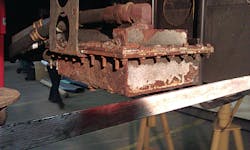
Are you aware of the hidden menace that is attacking the inside and outside of your buses and fleet vehicles? The "salt age" is dawning in North America and road salts are creating an epidemic corrosion problem for America's transit systems. The U.S. Federal Highway Administration released a two-year study on the direct costs of metallic corrosion ("Corrosion Cost and Preventive Strategies in the United States, FHWA-RD-01-156," [http://www.fhwa.dot.gov/research/publications]). This study estimated that $6.45 billion is spent on corrosion-related repairs and maintenance in the transportation industry. As an industry, suppliers and transit systems are trying a number of approaches to address corrosion-related problems. One method to control corrosion causes by road salts is to integrate the proper wash systems and detergent technology into routine cleaning of buses.
For several years now, transportation-related industries have been concerned about the corrosive effects of road salt. The American Trucking Association's Technology and Maintenance Council (TMC) has established a Corrosion Action Control Committee to investigate and propose solutions for corrosion-related problems. During the TMC Fall Conference, a number of speakers spoke about the extent of the corrosion problem in the trucking industry. The magnitude of corrosion-related problems is astounding. Corrosive road salts attack a variety of metal components to include frame rails, crossmembers, suspension components, air tanks, fuel tanks, battery boxes, brackets, brake shoes, electrical systems, air-conditioning condensers, radiators, metal coolant tubing and steel wheels. It stands to reason that road salt corrosion is a problem for all vehicles that share the road.
The harmful effects of road salts
In order to maintain open highways and increase highway safety, the northern tier of the United States has used salt (sodium chloride) for years to combat ice, snow and sleet. Over the last decade, many state highway departments have switched to the more effective calcium chloride (CaCl2) and magnesium chloride (MgCl2) deicers because they provide lower freeze points, are less expensive, less corrosive to concrete and less harmful to the environment. However, the use of these additional road salts has resulted in a major increase in vehicle corrosion, particularly the underbody and electronics of buses and other fleet vehicles.
The sodium, calcium and magnesium chloride salts lower freeze points of water to keep highway surfaces wet and slushy rather than icy. Magnesium and calcium chloride are much more effective deicers because they stay liquid at a much lower temperature and less material is required to melt the same amount of snow and ice. Many State DOTs are now spraying calcium and magnesium chloride solutions on the roads prior to and after winter storms. These deicers are often mixed with sugar beet juice or vegetable oils for better adhesion to the road surface. While the roads are safer, the deicer cocktail, sand and traditional road grime create more difficult vehicle cleaning conditions.
While these antifreeze salts are water soluble for deicing applications, the calcium and magnesium chlorides get quite viscous as water evaporates, collecting sand and dirt and form compacted deposits in recessed areas. These difficult-to-remove deposits are the source of major chloride corrosion. To complicate the situation further, if the road salts are not removed from the vehicle, MgCl2 and CaCl2 will pull moisture out of the atmosphere, rewet and continue their corrosive actions.
What is the effect of road salt on the typical transit bus?
Corrosion associated with winter deicers is becoming a multimillion-dollar headache for the transit industry. In an era of tight budgets, a transit bus is expected to last for 12 to 15 years, but corrosion can significantly shorten the useful life of a bus. From an exterior viewpoint, road salts immediately mar the appearance of a bus until it can be washed and contribute to exterior surface pitting/rust spots. If not completely removed, road salt residue may affect the quality of advertisement imagery on bus exteriors.
Road salt corrosion is not limited to the bus exterior. During the winter months, passenger shoes bring the road salt into the bus. Frozen slush on boots often melts during the ride and the deicer in fluid form is able to seep into the smallest cracks and crevices. The result is fastener and flooring corrosion from the inside of the vehicle, as well as accelerated wear on floor runners and interior fabrics.
The most concerning area of corrosion from road salts is the underbody of the bus. Corrosion from chlorides attacks the under carriage metal, engine components, brakes and electrical systems. The damage to vehicle systems is not only a cost burden to a bus owner, it can result in a vehicle safety issue for drivers and passengers. Rust/corrosion on load-bearing metal structures makes the vehicle unsafe for driving.
What is the transit industry solution?
Transit industry suppliers are working on many approaches, such as metal plating and better coatings on new structural components. Some manufacturers are even replacing underbody carbon steel with stainless steel — a very expensive alternative. In addition, many transit companies are adding after-market permanent coatings to the underside of existing vehicles. All of these new technologies will help, but for the foreseeable future it is not possible to protect all the potential corrosion points on vehicles. Are there alternatives to corrosion-resistant materials and specialized, permanent coatings that will help prevent deicer-related corrosion? One approach is to thoroughly clean the vehicle by integrating the proper methods and detergents into the routine cleaning cycle.
Integrate corrosion control into transit wash systems
Effectively cleaning road salts from vehicles requires a different approach from conventional vehicle washing. The focus needs to be on cleaning the inside and outside of the vehicle, including the underbody. It is vitally important to use a detergent with the right chemistry to break the road film and neutralize the corrosive effects of the deicers. Using a detergent with the wrong chemistry can aggravate the road salt problem. Most conventional transit wash detergents are either neutral detergents or alkaline cleaners. These traditional detergents are not capable of breaking and "neutralizing" the impacted salt deposits; the wrong detergent will react with the road salts and make them more difficult to remove from the vehicle.
Surprisingly, some (not all) low pH detergents have proven to be especially effective at neutralizing the corrosive effects of the deicers. These low pH detergents will make the road salts soluble allowing for easier removal in the wash process. In a touchless wash, an alkaline detergent must be used in conjunction with the low pH detergent in order to get a clean vehicle. Magnesium and calcium chloride increase the effective hardness of the water, as the deicers add additional magnesium and calcium ions to the cleaning cycle. Transit wash operators will most likely need to increase the hardness control of alkaline products.
These same low pH detergents should be used to clean the inside of the buses, as well as luggage compartments. It is important to get the detergent under floor mats to remove road salts that may have seeped beneath it. If these deicers are not removed during interior cleaning, corrosion will be just as bad from the inside out.
Most transit washes focus on cleaning the exterior painted surfaces and glass of the vehicle, despite the fact that most of the road salt-caused corrosion occurs on the underside of the vehicle. At best, these washes might have a high-pressure rinse or flush applying water to the underside of bus. To clean the undercarriage, spraying high-pressure water on the underside of the vehicle as it enters the wash is not sufficient. Low pH detergent must be applied to the underside of the vehicle as well to remove the road salts. Applying the detergent with foaming nozzles as the bus drives through the wash is an effective way to ensure adequate detergent coverage on the undercarriage. Adding the equipment for an underbody wash is a relatively simple and inexpensive addition to an existing wash.
The industry is using a multi-faceted approach to combat transit vehicle corrosion related to winter deicers. One of the most effective ways to prevent this corrosion is to use a new three-step cleaning process in your transit washes. The first is the replacement of neutral and alkaline exterior detergents that have little or no effect on salt neutralization and removal, with a low pH detergent designed to neutralize and remove salt. The second is the application of this product concept in the interior bus cleaning. The third and most critical is the process design of an underbody wash system that should include an initial high-pressure water flush to break up compacted soil deposits, followed by the low pH detergent "neutralizer" wash. Adopting this three-step approach is a simple, economical solution that can easily be integrated into existing vehicle wash practices. Using the products with the right chemistry and thoroughly cleaning transit vehicles can lower the maintenance costs associated with road deicer corrosion and extend the useful life of a transit vehicle.
Tony Vertin is the chief operating officer with The Ver-tech Companies.