A Private Corporation Working in the Public Realm
August 28, 2005, the most economically destructive hurricane to ever strike the United States powered up to a Category 5 storm. Katrina caused widespread devastation along the Gulf Coast states. The damage in New Orleans was worsened from the breaks in the levees and at least 80 percent of New Orleans was under flood water, and some parts of the city under 20 feet of water.
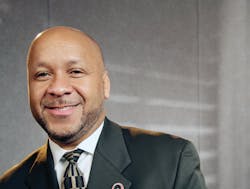
“You had a situation where the RTA had lost all of its infrastructure because of Katrina that when you came here, the staff that was here was still working in trailers,” says Justin Augustine, III, chief executive officer, New Orleans Regional Transit Authority and vice president with Veolia Transportation. “It truly was a tough situation, it really was. You had some really great folks that were here before, but unfortunately had been demoralized. The assets were gone, they were financially broke; nobody gave them even a simple chance in Hell of surviving.”
“When we first came to the authority, the RTA was faltering in terms of its inability to fund its pension obligations; it didn’t have any financial credibility in the marketplace.” Augustine continues, “They had a cash-flow problem; a situation where a union agreement had previously here was not cost-beneficial to the authority.”
One of the things they did when taking over the RTA was to put together a series of plans to turn things around, including a capital improvement plan, a capital infrastructure plan, a long-term financial plan and a long-term transit plan. As Augustine says, they critically needed to set a footprint on how they would provide transportation in the community they were contracted to serve.
“We basically had to come in here and change the culture, recreate and establish a good morale, reposition technical staff to the right positions in which they could properly serve and be held accountable, bring in our corporate best practices, replace an entire transit fleet, rehabilitate the streetcar services in the system, reconstruct the buildings that had been destroyed, and rebuild financial credibility in the marketplace,” Augustine states.
Veolia took over the contract effective October 13, 2008 and it was an interim agreement. Augustine and an interim team of managers went in and then on September 1, 2009 a management contract. Post-Katrina, the RTA was clearly in trouble. Augustine says, “We thought business as we manage it, would be a perfect fit to come in to New Orleans and take over the transit authority under a delegated management contract; that’s kind of how we looked at New Orleans.”
Learning Transit Operations
Augustine’s background was in accounting and finance and got involved in transit through his work with an international CPA firm, KPMG. “We were doing the financial feasibility study of the financials of the transit authority for the utility company,” Augustine says. “We took over the city of New Orleans as a client and I got to know the chief financial officer so when the RTA deal was put together by the state legislative, it went in to effect on July 1, 1983. They were recruiting for technical talent and one of the areas was in the financial arena; that’s how I got in to transit.”
Once he got there on the financial side, he became interested in the entire transportation concept. “For me it wasn’t just transportation, it was a people business and the needs of the community enhance the transportation.
“As a young man I was working on the financial side of the house; in the evenings I would go out and in the operations parts of the facilities and would try to learn the operations.” Augustine continues, “They became my best mentors, the maintenance, operators and operations guys out there. I would spend basically 16 hours a day doing transit. “
Augustine left the agency in 1985 and went to Austin, where he was the general manager there. After that he did work in Africa. “I had a company called American Transportation Corporation. We were a private company and they had an investment group called New Africa Advisors, which was an investment firm in South Africa post-Apartheid. Thirty percent of that investment portfolio was transportation-related.” He explains, “I partnered with them to help them get 30 percent of their portfolio in finding transit opportunities throughout Sub-Sahara Africa.”
He came back to the United States in 2000 and came back with Veolia as regional vice president on the West coast before coming back to New Orleans.
A Different Kind of Business Model
Normally in the private sector, a contractor runs part of a transit operation. As Augustine explains, “We may run paratransit operations or we may run maintenance operations, but here in New Orleans, we are the public authority.
“From my office on down, every employee is a Veolia employee and we only have the board of commissions for the RTA and the RTA is one employee, which is basically like an assistant to the board.”
Veolia runs the day-to-day function of the entire organization, the maintenance, transportation, finance, accounting, procurement, legal, human resources, safety, grants. “You name it,” Augustine says. “Everything an authority has to do is a Veolia responsibility.”
With this arrangement, Augustine says it’s a prime example of a good public-private partnership. “But you have to be careful because although you’re a private corporation, you still work under the public guise.
“You’re receiving public funds, federal grant money, state funding, sales tax monies, so when you’re spending those monies, you still have to follow federal procurement processes.
“Our objective is to keep the organization financially sound and at the same time being mindful of the needs of the general public. Veolia doesn’t own any of the assets; the assets are still owned by the regional transit authority. The facilities, the buses, the streetcars, the transit police cars, the maintenance facilities, all of the assets are still assets of the regional authority.”
A downside was that they had to basically downsize the organization, Augustine says. “The now-private model, we just didn’t need that many employees to manage the system the way they had the system managed before.
“We have to be cost-competitive; we have to be profitable; we take on a lot of the risk of this authority.” He continues, “If we’re not very smart in our business practices, then we can not 1. Turn a profit, and more importantly, we can’t deliver the service under the cost structure which we committed to in our contract.”
He explains that they have the corporate resources of Veolia that they can use and since they’ve been at the RTA, they’ve had about 75 technicians from around the world to come in. “Kind of like a SWAT team for us.” He says, “They come in and assess and review and analyze certain areas of our business and our operations and put the best practices from Veolia in place and then train the staff how to maintain it and then they go away.”
Rebuilding the RTA
Rebuilding post-Katrina involved rebuilding the infrastructure, the financial credibility, and the service for the communities the RTA serves. For the credibility in the financial marketplace, Augustine says that within a year and a half, the RTA bond ratings when from negative triple B- pre-Katrina, Zero post-Katrina, to triple A-rated bonds from the MSNT and very good-rated bonds from Moody’s when they went out on the market for its first bond issues. “It saves volumes in terms of the amount of work and efforts we put in to this organization to right the financial credibility of our organizations.
“Today the RTA has one of the best bond rates in the whole state of Louisiana,” he states.
With a displaced population and then people coming back to the area, the RTA had to deal with the changing demographic shifts in the city. “We had to be very creative as to how we would set the system up for future growth and at the same time, reconnecting areas of the city that had been disconnected after Katrina,” Augustine explains.
“We have a five-year plan on how we see the changing demographics of the city based on re-population there and that our transit services adjust accordingly.”
There is also an aggressive streetcar expansion program underway. “We were the proud recipients of Tiger I funding,” Augustine says. “We received a $45M grant from the federal government to expand our streetcar program here in New Orleans.”
A short time ago the RTA received another grant, $400,000 from the Department of Transportation that is being matched by in-kind services of the RTA and by a $40,000 scholarship gift from Veolia, to create an apprenticeship program to train young people to be artisans and craftsmen on the streetcar rebuild effort.
“We took the technical college and we worked with the state workforce one development program and approached them with a need in terms of how craftsmen and artisans at the streetcar are skilled individuals in these crafts and learn on the job,” Augustine explains. “As our population ages, we need to make sure we have a younger population coming up to continue that trade.
“We have taken 20 young people that were given scholarships for technical training. For 18 months we’re going to train them in the different disciplines of the streetcar process and that will ensure us a good workforce that we can use subsequent to them graduating.”
In addition, the RTA is also going through the streetcar rebuild and rehab program on the green cars in the fleet, 35 of them. The RTA received a federal grant to hire additional staff for that restoration process. That staff, along with the apprenticeship program, will provide the skilled individuals within the service operations.
An important part of the work at the RTA is positioning the system to better itself and to prevent situations like this from re-occurring. On the facility side, working with FEMA, it was to redesign the electrical system so that the point is higher above the flood gauge line. “Everything is now on platforms,”
Augustine explains. “In terms of the whole entire electrical grid, it’s been placed on a second-story level that’s 14 feet above where the flood lines were.” He adds, “We feel very comfortable, at least we will never lose electrical grid again.” Everything has also been encapsulated and protected, so there is better waterproofing than before.
The fleet is also more mobile than before. With agreements with other entities throughout the state, if the order has been given to evacuate, the rolling stock can be moved out. “In 24 hours we can empty the fleet out,” Augustine says. “We can get it out of harm’s way and at least it won’t get destroyed and have a similar situation occur again.”
The St. Charles streetcar line is the oldest, continuous operated rail line in the entire world which is amazing after all it’s been through, Augustine says. The streetcars are on their own tracks, so in case of emergency conditions, they would be brought to the river, the highest point in the city. The RTA is working to negotiate with a trucking company that if it’s a category 5-type hurricane closing in, a trucking company could potentially flatbed the streetcars out of the area.
A mobile command center would provide a place where they could operate the system off-site. The vehicle is housed at the facility and can be driven away in case of evacuation. “It can cut payroll checks, run dispatching and scheduling, and we can literally maintain our asset base and the movement of our assets via that mobile center,” says Augustine.
“The evacuation process has been refined to deal with the changing conditions,” he says. “All of the employees have been retrained on the evacuation efforts in terms of asset protection procedures. We’re a lot more prepared to deal with an impending storm of that severity than we were before.”
Rebuilding the Community
The biggest challenge facing the RTA is keeping up with the growth rate. The population has continued to increase, as has the ridership. The agency is also looking to go regional in the next five years, Augustine says. “It’s an opportunity, a truly regional opportunity, to take public transportation from New Orleans to Baton Rouge and to the North Shore using all the various modes of transportation."
With the growth and changes, community involvement has been key. When they first came on board, Augustine says one of the first things they did was to go down to one of the most devastated areas back in the lower 9th ward to meet with the community. “One of the things we heard was that they did not want to be disconnected from the rest of the community,” he says.
“We had to become part of them,” Augustine explains. “When I would go out to the community I would say we suffered just as much as you suffered because we lost everything also. And I apologized for not having from the beginning, the services that they desperately needed because we didn’t have the assets and to make them aware of the process it took for us to get the financing in place to get the equipment in place; it was going to take some time.”
Keeping the community involved, aware of the process, and in the interim the RTA worked at being creative, listened and put out some service with anything they could get their hands on, Augustine says.
“We created what was called The Lil' Easy, a specially designed service made up to serve the most devastated areas of the city.” He explains, “The Lower 9th ward was one of the most heavily damaged areas of the city. Pre-Katrina, they had five major bus routes.
“When we took over, we only had one partial line.” The area also had gone from more than 27,000 households to under 1,000. Augustine says, “You couldn’t put that amount of service out there because you didn’t have the demand or the population, but at the same token, the people that were there had a culture of having public transportation available to them and it wasn’t there anymore.”
They designed a neighborhood circular service that was on call and on demand. “We granted them the naming rights and the branding rights, we worked with the communities out there and it became their service, their system, and they took ownership of it.
“It was very successful because one of the best things we heard when we rolled out the service on the first day was one resident that said we saved her $17.25 a day and that’s real money.” Augustine explains that she had to take a taxi cab to and from her place of employment because she couldn’t get there on public transportation.
“I think that is one of the most important things that we have been able to achieve is our ability to go out in to the community and be able to listen and to fulfill the desires of the community.”
Another example he gives is access – or not – to grocery stores. Post Katrina, there weren’t any grocery stores in the area, then finally one that opened up. “To get to the grocery store on public transportation, it would take you 240 minutes to get from a certain location in the lower ninth ward to a grocery store.” He continues, “Today, that same trip is like 15 minutes. So we enhance the quality of life.”
Summarizing the experience Augustine says, “When you have these neighborhood advisory committees, these neighborhood groups that invite you in to their homes, it’s a wonderful thing.”
He explains, “One of the things that we also did was as a public-private venture, weren’t a city agency, per se, it’s technically a subdivision of the state of Louisiana, the thing that we were able to do was to listen to these communities, we weren’t hearing just transportation needs; we were hearing other needs.
“We were able to then take those needs that we heard and transfer them over to appropriate city departments so the neighborhood had the opportunity to have a voice not only in transit, but any issues impacting their community that we were able to relay back to the appropriate city department. We had that responsibility.
“We helped them become a mouthpiece and champion for some of their needs in some cases the community felt weren’t being heard.” He stresses, “So that public outreach program was a great thing.”
Expo Comes to New Orleans
The transit world is coming to New Orleans for the American Public Transportation Association’s (APTA’s) Expo in October and Augustine says they will all see that those at the RTA love what they do and the attendees are going to have a magnificent time to enjoy the beauty and charm of the city.
People will have the opportunity to ride the St. Charles streetcar line, which services 16,000 passengers a day. “It is very iconic to our city in terms of being recognizable and people in the city of New Orleans love their streetcars,” Augustine says. “We have the Green Line, which is basically the St. Charles Line, then we have the Red Line, which basically services the riverfront and the canal street area.” And they’re beginning construction on the Loyola corridor.
In early June, the RTA officially broke ground on the Loyola/Union Passenger Terminal Streetcar Expansion project. The 1.5 mile line will feature four covered stations at Tulane Avenue, Poydras Street, Julia Street and the New Orleans Union Passenger Terminal.
Augustine says from the moment they learned they were hosting APTA, they started putting committees together. “We have internal committees, an operations committee, a finance committee, a volunteer committee, that we all meet. When we first started, we would all meet probably once a month and then by the advent of 2010, that became twice a month. And now, here we are in 2011, we’re meeting weekly and we’re speaking daily because of all the things we have to do for this event.
“We’re extremely excited about it; we have a story to tell,” Augustine says. “Clearly we are working very closely with APTA to make sure that the 17-plus thousand attendees, have the show of a lifetime in the great city of New Orleans.”