Cost-Effective Sustainable Design and Decision-Making
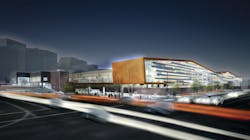
The Los Angeles County Metropolitan Transportation Authority (LA Metro) recently commissioned the design of a new bus maintenance and operations facility to be located near Union Station in downtown Los Angeles. RNL and Maintenance Design Group were chosen to provide a design that was both functional and highly sustainable. As this was a public facility it was necessary to supply all essential services while creating an icon for responsible, sustainable design and remaining cognizant of budget constraints. Being the first new maintenance and operation facility to be commissioned by LA Metro in more than 25 years, optimizing Metro's bus transit service throughout Central Los Angeles and the surrounding area drove the need.
Visible and thoughtful design approaches related to alternative energy, water conservation and the working environment allows LA Metro to establish itself as an agency on the leading edge of the industry, while capturing valuable political capital within the local community. The design for this state-of-the-art facility, dubbed Division 13, succeeded in each of these requirements through careful adherence to a disciplined decision-making process that prioritized current and immediate needs, and assigned a value to long-term projections related to operations, market factors, technology innovations and community values.
The Division 13 facility is designed to accommodate up to 200 CNG standard-sized buses or an equivalent combination of standard and 60-foot articulated busses. It includes a maintenance building with 17 service bays, tire and chassis wash bays, and a body shop. The buses, along with 40 non-revenue vehicles, are housed in a multi-level, structured parking garage with fuel, wash and brake inspection facilities within the footprint of the garage, and 397 employee and visitor vehicles below grade. A fleet operations and transportation building for more than 500 employees faces the garage along one primary street façade, and additional welding and radiator shops will be relocated into an existing facility on site. The entire facility sits on a 7-acre urban site prominently located across from historic Union Station in downtown Los Angeles. With both foot and automobile traffic passing regularly, the facility had to present an urban face to the street, while maintaining needed security levels and operational circulation.
The design's guiding principles of functionality and sustainability remained at the forefront of the facility's design process. The project is registered with the USGBC as pursuing LEED-NC Gold. Silver was the contracted target, but as the team began to design and investigate various approaches to site planning, equipment selection and systems, the appropriate certification level naturally began to present itself. Potential project features discussed included site and building shade structures, natural ventilation, glare and heat reduction in regularly occupied spaces, and a green roof garden for employees. Photovoltaic panels integrated into the façade and the facility's roof, a 275,000-gallon underground storm water retention and recycle system, as well as a future "Green Fuels" facility for public vehicle use all made their way into the project. Many other ideas did not make the cut. In each case, the key determining factor was a rigorous and comprehensive analysis of the pros and cons of each idea, which resulted in a total project value that could ultimately be assessed by the client. When this kind of review is performed, decision-making becomes much clearer and straight-forward, and surprises down the road are minimized. The result is a project that is predisposed to meet, or exceed, everyone's expectations.
Decision-Making
Identifying possibilities, discussing options, and developing a list of sustainable features within a project, is important, but it's also the "easy" part. The process of determining which features to select is what ultimately establishes what the project will be and where it will lead the agency in the long run. No item is inherently "good" or "bad;" each one will have advantages and disadvantages which can differ greatly depending on the project and its individual parameters. There are four key factors to evaluate in making final decisions on sustainable elements for a project.
1. Committed Client Leadership
Without a strong client, and particularly one serving in a project management role, sustainable design approaches may not succeed. The role of the design team is to develop solutions, educate the client and enable the client to push a project to its highest level. Integrated within that is sustainability. Transportation facilities typically involve multiple levels of approvals, and multiple departments with diverse user group needs. Within that structure, there are inevitably individuals that may need to be educated on the benefits of sustainability and the misconceptions of its costs and/or benefits. These individuals may also need assurances that a sustainable process need not disrupt their operational models or negatively alter the way they conduct business.
A strong client lead that believes in the principles of sustainable design can help educate other team members and assist in making the executive decisions needed to keep the project moving in the right direction.
2. Budget Constraints
In a "perfect world," cost would not matter. However, this is a luxury transportation agencies simply cannot afford. The cost of implementing a good, sustainable practice can outweigh the benefits of the practice. Often, this can be true in renovations or additions to existing facilities, where new and old have to integrate with one another. Collecting and reusing stormwater on site can save considerable utility costs year-over-year, but if the site is not large enough to do this without underground tanks, the cost of the tanks may be prohibitive. Likewise, recycling construction waste or performing additional building commissioning over the first year of the facility are good practices and can yield critical energy source information, but, they cost money to perform and those costs must be evaluated. Every project has a budget, and as the budget is approached and/or surpassed, it may simply not be feasible for the client to pay the initial costs associated with some items, regardless of their long-term benefits. An experienced design team can identify overall project savings to help find room for desired sustainable approaches without a critical loss to facility quality, size or effectiveness.
3. Lifecycle Cost Analysis
A key element of comprehensive decision-making is developing an understanding of facility life-cycle costs for design items. A simple comparison of first costs, or initial capital investment costs at the time of construction, may not provide a true picture of the "value" to the client for implementing a sustainable design solution. Using life-cycle costing allows the owner to evaluate costs from a more comprehensive viewpoint. There are three primary factors to consider in lifecycle costing.
Payback Period vs. First Cost – A good way to understand this is to think of purchasing a new family car. Car A may cost $20,000 initially, while Car B costs $25,000. But, over the 10 years you own the car, the maintenance costs for Car A may be $10,000, whereas the maintenance costs of Car B is only $2,000. Therefore, over the lifecycle of the car, Car B is a better value at $27,000 than Car A is at $30,000. This may be the best reason to use lifecycle cost comparisons in transit facilities, because they tend to be utilized for 30, 40, 50 years, or more by an agency. In some larger cities, there are maintenance and operations facilities that have been operating for 100 years! Sometimes sustainable design solutions are at essentially no additional first cost to the owner. But if the payback for installing, for example, a high-efficiency mechanical system is 3.5 years in comparison to the projected energy savings and a building is projected to operate for 30 years, that means the owner is saving considerable operating funds for 26.5 years. At Division 13, LA Metro chose to invest in a more robust HVAC system, and a storm-water reclamation system which could reclaim as much as 1.9M gallons of storm water per year, at the typical rainfall rates in Los Angeles. The bus wash system internally recycles 70 to 75 percent of its water, leaving an initial fresh water requirement of about 1.3M gallons per year. Whatever remains in the storage tanks could be used for irrigation or grey water needs, so, LA Metro has essentially eliminated the majority of the cost of municipal water to its facility for the lifetime of its use. This is a tangible monetary value to the agency.Sustainable Design Costs vs. Traditional Design Costs – Some sustainable decisions undoubtedly cost more money initially, but pay the client back over time. Others do not but are seen as important for other reasons. Recycled materials can, at times, fall into this category, however the client may be motivated to pay the extra cost to align with an internal commitment to sustainability, educate the populations they serve, further employee comfort and productivity, or advance the use of specific materials in the belief that greater industry usage will result in more competitive costs that can be claimed in future projects. The industry has seen significant cost reductions to materials such as recycled carpet tiles, low volatile organic compound (VOC) paints and recycled steel. The Division 13 project is taking advantage of all these materials, as well as calling for higher fly-ash contents in the substantial amount of concrete the project demands. Any cost increases were successfully offset in other areas to avoid budget overages without sacrificing program. Product History and Reliability – An idea or product may be good for one application, but not appropriate for another. Or, it may be theoretically sound, but not practically reliable. For example, pervious concrete works for vehicles up to a certain weight and size, however, a transit agency must be careful to review and understand the working history of this product before installing it in bus yards with high circulation patterns. On the Division 13 project, the team wanted to avoid potential dark zones caused by bus shadows on the upper bus parking deck. This was a concern because the project is visible from taller surrounding buildings. Designers investigated and proposed the use of recessed ground lighting fixtures rather than standard poles to light the upper parking deck. Although the team believed the lights would work, the historical data to support the argument was just not strong enough to provide a suitable comfort level for the client. In the end, the product was not used.
Making use of all of the above techniques together is critical in making the right life-cycle-based design choices for a project. The solution that provides the best long-term value to the client is most often the right solution.
4. Operational Tendencies and Staff Strengths
Every agency operates in a manner particular to themselves and their organization. It is no surprise that an urban agency with high annual ridership, fairly consistent revenue generation, and a large fleet has to operate differently than a rural or small suburban service provider in a number of critical ways. Good decision-making in either case is dependent on the director's, or general manager's understanding of both the personnel on hand, and the agency's strategy for the future. An experienced design team can help bring clarity to industry trends and share lessons learned, however staff and agency projections are unique to each project and need to be clearly understood early on in order to make the best long-term decisions.
Through experience, designers can develop recommendations for floor plan layouts, key space adjacencies, equipment selection and a host of other items. While most of these work well in just about every case, others are more dependent on the people operating the equipment or supervising the work. A case in point is lower level work areas as opposed to individual work pits in bus PM inspection bays. Independent of the pros-and-cons list that a design professional can develop, some mechanics say they will never work in that environment, and some say they will never work in a facility without it. These beliefs tend to come from specific experiences, but regardless, if the staff operates well in a certain way, it must be a part of the larger design conversation.
How the organization has come to operate agency-wide over time is just as important to a successful project outcome. These considerations may include procedures that work well with greater city or county resources, financial structures and maintenance patterns. Installing a high-efficiency HVAC system, with special filters and maintenance schedules will only work if filter replacements can be funded and crews understand new maintenance schedules required to preserve optimum operating efficiency. In a LEED Gold maintenance facility project in Tempe, Ariz., the design team suggested installing a stabilized decomposed granite (DG) surface in the employee parking lot rather than asphalt, in order to both help stormwater retention and reduce the heat island effect of the site, a critical environmental concern in the high, dry desert climate of Tempe. The project has been operating for four years with great success, but before the decision to use DG in this application was made, a series of discussions took place with city maintenance personnel, local stabilization surface material subs and other key city staff to make sure the full cost of ownership of this material was completely understood. In the end, this decision, although the first in a Tempe city project, will save the city hundreds of thousands of dollars, as well as creating a healthier, more enjoyable work environment.
The sustainable design solution used in the LAMTA Division 13 project that best exemplifies this kind of comprehensive decision-making process is the use of photovoltaic panels on the Garage and Maintenance Building. The panels will be located on the roof of both buildings, as well as along the prominent Cesar Chavez St façade and are important for a number of reasons. Initially thought of as a public-private partnership (PPP), during the course of design it became apparent that the best value to LA Metro would be to purchase and own the system outright, rather than lease it from a third-party. The payback for the first cost of approximately $1.9M for a 500kW system was calculated at between 10 to 14 years at today's energy costs. As energy cost's rise, the payback time becomes even shorter, and the building is anticipated to operate for a minimum of 30 years.
In addition to providing on-site renewable energy, the panels along Cesar Chavez also serve to visually screen the parking garage from view, a requirement of the project. If PV panels were not used, money would have been spent on another screening material, so the effective cost of the panels was reduced by the cost of the traditional screening method required. The reliability of PV panels has increased in recent years, and the design industry's ability to design and install them at optimal angles and locations has also matured.
There was very little concern about long-term effectiveness of this product, which gave the client a higher comfort level with which to make the choice to use this system. Although staff does not currently have procedures and equipment in place to maintain the panels, contracted maintenance was a viable solution that allowed employees to continue to operate in an efficient, functional manner. Finally, the visible photovoltaic panels are a sign to the public that the agency is conscious of and serious about environment issues and resource conservation. By utilizing life-cycle costing techniques combined with strong client leadership and a clear understanding of both project budget and staff resources, LA Metro made an informed decision on a sustainable design approach that will produce ongoing benefit for now and in the future.
Things to Remember
Sustainable design is most effective when it's the result of informed decision-making that results in cost-effective solutions in projects. Sustainable, environmentally relevant design is not only economically sound, but fairly easy to accomplish with the right partners and by making the right decisions early in a project's design phase. It is important that clients and designers perform rigorous and thoughtful analysis of ideas, and become well acquainted with a facility's staff and individual project needs. Each project will be different from the next, but, with strong, committed leadership, every project can become a point of pride that will benefit the agency and community for years to come.
Ken J. Anderson, AIA, LEED AP BD+C, is a senior associate with RNL.