Rebuilding of Washington’s Metro
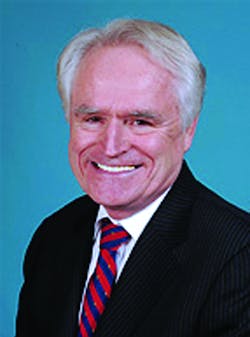
After more than 40 years in the transit industry with the Port Authority of New York and New Jersey, Amtrak and most recently executive director of New Jersey Transit, Richard Sarles was ready to retire. And he did retire. Briefly.
When the interim assignment came up to lead the Washington Metropolitan Area Transit Authority (Metro), Sarles saw it as an opportunity to bring his experience to WMATA.
“I thought it would be a year at the most, maybe six or nine months in reality,” Sarles says. “The first several months were pretty trying,” he stresses.
A $189 million budget gab, the National Transportation Safety Board was on site, the memorial service for the victims from the June 22 collision, and he had hearings before subcommittees and Congress within the first few months in the post.
“WMATA is in many respects the leader here in terms of being in front of Congress all the time,” Sarles explains. “When they think of public transportation, especially subways, they think of WMATA. What goes on here is symbolic for the rest of the country.”
Knowing it would be short-term, he says he came to D.C. to see what he could do to put some foundation blocks in place.
As these foundation blocks started to take shape, Sarles says, “I saw the organization and many good people in the organization responding to this and actually wanting to move a step in the right direction.
“As it came to the end of the calendar year, I looked around and said I’m actually enjoying this,” he says. “When you have supportive and good people around you … the will was there in the organization to do it.”
Sarles liked the progress that was being made in the short-term and wanted to stay on for the challenge and on January 27 of this year was unanimously confirmed as general manager/CEO of Metro by the Metro board of directors.
Sarles says, “I liked the people, I thought the people wanted to get the job done and I’m going to be here for a few years to help move in that direction.”
Safety First
Walking in the door of Metro, Sarles says there was a lot of negative press because of the accident, because of a lack of maintenance, a lack of reliability and because of the way the organization was set up in how it was structured.
The No. 1 priority from the time Sarles initially came on is safety. Just prior to Sarles starting, Metro had hired a new chief safety officer and the reporting relationship so that the chief safety officer reports directly to Sarles.
“We set about strengthening that safety department, bringing additional people in, people with rail experience behind them.” He continues, “A lot of very experienced personnel came into the organization; we brought fresh eyes to the organization.”
They also worked with the operating departments to get input from the employees on safety concerns. The new safety organization structure within Metro ensures that there will be communications from the employees in terms of their needs and concerns right up to an executive safety committee.
With the new structure, people from the safety department are embedded in the operating units so they’re out there in the garages, they’re out at the terminals; their presence is always there.
Sarles says they also ensured employees knew they could report concerns without the fear of retribution and they are working with the union on close-call reporting to set up a safety measurement system. This is all geared toward not only preventing accidents, but identifying hazards through analysis of data and feedback.
“There’s a major push to really change the safety culture here,” Sarles stresses. “We’ve set that in place and we have to stay on it.”
He says they also embraced every one of the National Transportation Safety Board’s recommendations, including ordering new cars from Kawasaki to replace the cars there were of concern in terms of age and crash energy management. “The board committed to spending a billion dollars initially on responding to NTSB recommendations and those things are on the way.”
And with a 35-year-old system, he says they’ve set about rebuilding the Metro program. The Red Line is one of the oldest and the most heavily used, so they are concentrating on that first. He says, “This is the nuts-and-bolts work, it’s tracks, it’s switches, it’s lighting, traction power, all those kinds of things.
“We’re working on rebuilding Washington Metro. “ Sarles says, “With a capital funding agreement we ended up with a $5B six-year agreement with the funding authorities here. We now have it pretty well laid out, the amount of money we’re getting every year with the plan and moving accordingly.
“I was smiling and happy with that,” he says. “I got the agreement last summer but the more recent possible turn of events, or at least discussions in Congress, are causing me significant concern with WMATA.”
Advocating for Authorization
With the discussions devoted to safety and state of good repair and then discussions of rolling back to funding of earlier years, that could significantly impact the capital program.
“On top of that, what could also affect us and affect most every other public transportation agency in the country, is rolling back to an earlier year of appropriation levels, that would mean we would get less federal formula funds we use for capital we anticipated.”
With one of the primary concerns when coming on to Metro was financial stability, advocacy is very important. “We’re obviously well positioned here in Washington to be a strong voice in that advocacy because people see us every day here,” says Sarles.
“It’s important we convey the economic benefits, not only economic benefits but the benefits to customers who need us to get to health care facilities, to schools and everything else. It’s just not about jobs; it’s about living every day life.” He stresses, “In an urban area you need public transportation.
“My view is that we were promised in terms of past authorization bills, a certain level of funding and with an expectation that would continue at a certain level and we have to advocate for maintaining that level.”
Quality Customer Service
Providing quality service is another area the agency is focusing on. Sarles explains how that extends in a number of areas, one of them being the interior design of the new cars they’ve ordered.
“We are using a lot of custom research,” he says. “There’s been some done before but more as we come up with the fine details of the interior design. That will guide us — formalized custom research.”
He says he’s used this process before both when he was at New Jersey Transit and at Amtrak. And, both times received great public reception. Though the interior of a subway car is different, he says they want to use the same process.
Another way of improving customer service is the reintroduction of the secret shopper program to get additional input on the service performance. He also says getting out personally to do meets and greets with customers in stations provides a better sense of the balance of customers’ views. “You’re not just listening to complainers, but people will walk up to me telling me they really enjoy the service; it’s good to get the positives and negatives.”
The Switch to Long-Term Focus
All of these things were started in the short-term when Sarles came on, but he said that now, as he switches to longer-term thinking, he’s turning his attention to several other areas. One of those areas is the bus service.
Metro has been successful over the years in replacing its bus fleet so it has a fairly young age for the fleet. But, like every other city, they get caught up in congestion and they’re looking at planning and looking at how to give priority treatment to buses, whether in regards to traffic signal priority or exclusive curbside lanes. Sarles says, “We’re going to be much more aggressive in working in a district DOT to try to obtain those preferential treatments and that will take place over the next year or two.
And then beyond that is also system capacity. As he explains, they can only go to eight-car lengths and it’s only a two-track system and if they look out 15 to 20 years from now, the system is going to get to the point where every day is like Inaugural day.
“Obviously we can’t work that way,” Sarles says. “We’re going to reactive and push forward with the planning process so we can identify for the future, what has to be done.
"This rebuilding of Washington Metro’s going to take years; it’s not going to occur over night.”