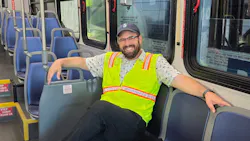
One word to describe yourself: Intentional
Alma Mater: Humboldt State University
Fast fact about yourself: I competed in track and field in college, throwing discus and hammer.
What’s your best experience on transit and what made it memorable? One of the most impactful transit experiences I have been part of occurred during the Camp Fire response, when transit resources were used both to evacuate residents and later to support recovery operations in the affected areas. During the evacuation, I saw firsthand how quickly transit became a critical lifeline, moving people to safety under extremely difficult and urgent conditions. In the days that followed, those same systems supported emergency responders and recovery teams working in the aftermath. What made the experience memorable was seeing transit step fully into its role as an essential public service.
In moments of crisis, it is not about routes or schedules, it is about people, urgency and responsibility. It reinforced that transit is not just a service, it is part of a community’s emergency response and recovery system, and it ultimately exists to serve people in their most critical moments.
Bradley Wright, national safety director, Transdev North America, began his career driving for a university and a school district. Throughout the years, he progressed to dispatch, training, supervisory and eventually management roles. In his current role, he’s responsible for over 30 contracts in the Northwest region while supporting other properties across the country.
As a leader, Wright draws on his background in secondary education and his experience teaching in California. Peers agree that Wright brings empathy, patience and strong communication skills to his role, helping him build trust across all levels of the workforce. His people-first approach has allowed him to improve the workplace, boosting morale and operational performance because operators are supported and valued. His leadership acumen is especially apparent during wildfire events, helping employees navigate through tumultuous situations.
Wright's personal experience of losing his home during a 2018 fire deepens the empathy he brings to his job and his community. He is known for supporting people with practical guidance and emotional support as they navigate rebuilding after a major life event.
In addition to his work at Transdev, Wright is also an associate instructor for the Transportation Safety Institute. Here, he shares industry knowledge and continues to strengthen safety practices beyond his regular responsibilities.
Wright is highly involved in his community. He is a board member for Butte County Young Life. He volunteers with the Chico Area Recreation District. He’s also coached various levels of youth sports, where he fostered inclusive environments to help the participants develop confidence and experience personal growth.
From frontline operations to national leadership and industry instruction, colleagues say he has consistently elevated his organization and the broader transit industry.
Is there a specific experience that led you to where you are today?
Having worked in both education and transportation, I have had the opportunity to see the impact transportation has on people's lives from multiple perspectives. I saw students whose ability to learn and participate depended on reliable transportation, and I later saw that same connection to opportunity, independence and quality of life across the communities we serve. Those experiences shaped my belief that transportation professionals must understand the passenger perspective, not just the operational side of the industry. That belief continues to guide my approach to safety, training, leadership and service today.
What do you enjoy most about your job?
The most rewarding part of my job is helping employees succeed and understanding the direct impact their success has on the passengers we serve. Across our operations, especially paratransit service, passengers depend on transit to access medical appointments, employment, education and community resources. By investing in training, coaching and safety culture, we are not only supporting our employees, but we are also improving the experience and safety of the people who rely on us every day. Knowing our work helps preserve mobility and independence for passengers is incredibly meaningful.
What’s the most challenging part of your job?
The most challenging part of my job is ensuring consistency in safety and service expectations across a large and diverse workforce while still maintaining a strong connection to the people doing the work. In transit, outcomes are shaped by thousands of daily decisions made by operators, dispatchers, mechanics and supervisors. Building alignment across those teams requires more than policies or reporting systems; it requires trust, communication and a genuine understanding of the challenges employees face while serving passengers.
What is the accomplishment you’re most proud of and why?
I am most proud of the opportunities I have had to develop employees and strengthen safety cultures throughout my career. Coming from frontline operations myself, I understand the challenges employees face and the importance of investing in their growth. Through leadership, mentoring and industry instruction with the Transportation Safety Institute, I am able to help individuals and organizations improve safety performance while keeping the focus on the people we serve. Every well-trained employee contributes to a safer and more positive experience for our passengers.
What is an accomplishment you would like to work towards in your career?
One accomplishment I would like to work toward is developing the next generation of transit leaders. Throughout my career, I have benefited from mentors who invested their time and knowledge in me, and I believe one of the most meaningful ways to give back is to do the same for others. Beyond teaching the operational and safety aspects of our industry, I believe it is critical for future leaders to understand transit from the passenger's perspective.
Every route, policy and decision ultimately affects someone's ability to get to work, access healthcare, maintain independence or connect with their community. If I can help develop leaders who never lose sight of that mission, I will consider it a meaningful accomplishment.
What is your best advice you can share from your area of expertise?
Never stop learning and never stop listening. Effective training is not about checking a box; it is about helping people understand why their work matters. When employees understand the impact they have on a passenger's day, particularly in paratransit where riders may depend on transit for their independence and quality of life, safety and service become personal. The best results come when employees feel valued, supported and connected to the mission.
About the Author
 Megan Perrero
Megan Perrero
Editor in Chief
Megan Perrero is a national award-winning B2B journalist and lover of all things transit. Currently, she is the Editor in Chief of Mass Transit magazine, where she develops and leads a multi-channel editorial strategy while reporting on the North American public transit industry.
Prior to her position with Mass Transit, Perrero was the senior communications and external relations specialist for the Shared-Use Mobility Center, where she was responsible for helping develop internal/external communications, plan the National Shared Mobility Summit and manage brand strategy and marketing campaigns.
Perrero serves as the board vice president for LIT, the second vice chair of the American Public Transportation Association’s (APTA) programs and communications committee and is a member of APTA’s Marketing and Communications Committee. She holds a bachelor’s degree in multimedia journalism with a concentration in magazine writing and a minor in public relations from Columbia College Chicago. Her work has been recognized with a first place AdWheel Award, AZBEE Bronze Regional awards, an AZBEE Regional Gold Award and an AZBEE National Silver Award.