The Cost of Death
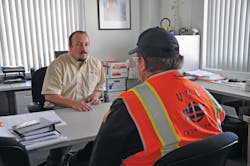
New Jersey Transit locomotive engineer Mel Caban is part of a sad but growing club within his profession.
While on the job one day, a younger person wandered onto the tracks in front of his train. The braking capacity wasn’t there and by the time he saw the person it was too late.
“I tell (people) you normally hear a thump,” he said. “And usually when you hear that thump it’s their body hitting my equipment.”
Caban’s experience was tragic and emotionally tasking, but unfortunately it’s becoming a very common occurrence in the United States that transit systems are trying to curb and operators are forced to deal with the emotional trauma that accompanies traumatic experiences on the job or when someone is hit by a train accidentally or in a suicidal action.
Understanding suicide is difficult for most people and when someone does it by train or bus, it can compound that confusion. According to “Night Falls Fast: Understanding Suicide,” jumping in front of a train is amongst the lowest choices of suicide, but also one of the most effective.
Younger people with severe mental illness are most likely to jump in front of a train, but some may also choose this form a suicide out of convenience, or out of impulse.
Suicide by train can also be brought on by copycats who read about another incident, which may lead some areas to become suicide magnets.
Transit workers across the country are subject to acts of violence and see death or violent assaults on a regular basis. And by being immersed in such situations, it can begin to have severe mental health effects on workers.
A study published in 2000 of the Brotherhood of Locomotive Engineers affiliated with the Long Island Railroad in New York, researchers discovered 70 different transit workers who were involved in incidents and how it affected them.
Researchers discovered some employees faced sleep issues, recurring thoughts about the incidents and some had feelings of social isolation and distanced themselves from family and coworkers.
While there is no long-term effect for those studied, the workers appeared to suffer from Post Traumatic Stress Disorder (PTSD) for several months until they learned how to cope with the incident.
A Lifetime of Guilt
Dr. Katy Kamkar, clinical psychologist at the Centre for Addiction and Mental Health said in a recent interview with "Mass Transit" magazine that PTSD symptoms can emerge from the stress that follows a traumatic event and transit workers are susceptible to, and very often exposed to trauma, such as assault, accidents, suicides or even witnessing street crime.
A study into PTSD in rail workers by the Health and Safety Laboratory states person-under-train incidents are a primary cause of PTSD in the railway industry and operators are told to expect at least one such incident during their careers. The study states 4 to 17 percent of people studied after such events had PTSD symptoms one month after such incidents, but 40 percent suffered some sort of psychological disorder.
“The one thing is, even after the symptoms of trauma, it’s very common or normal for people to have symptoms of trauma after traumatic events, having re-experiencing the event or having flashbacks or nightmares or wanting to avoid thinking about the accident and the location of the accident or even reminders of the accident or isolating themselves or having difficulty sleeping, difficulty concentrating being hyper-vigilant or constantly on guard, or feeling excessively jumpy,” Kamkar said.
“People often have those symptoms, it’s normal to have them at the very beginning but for most people, they get the symptoms and they gradually decrease over time. It’s when the symptoms become more intense over time.”
Sean Morris, vice-president of operations for Blomquist Hale Consulting, which offers counseling to Utah Transit Authority (UTA) employees after a traumatic accident, said immediately following a fatal incident the company goes and meets with the operator where they begin to deal with the aftermath of the incident. Counselors then discuss the issues with the operator to make sure they have support and to make sure they’re safe.
Most of the counseling sessions happen one-on-one, but some operators will have family members there to help get them through the emotional trauma of the incident. Some of the operators will have a difficult time with the situation right after it happens, but Morris said others may take months for issues to arise, so they must keep on top of the situation with the operator and the transit authority.
Even if the operator isn’t overly shocked right after the incident, Morris said the emotions from the event could rear itself again months or years down the road from other professional or personal incidents because the experience of driving the train will last the rest of their life.
“I’ve worked with a UTA operator who felt a lot of guilt. It was a circumstance where someone committed suicide, but that operator felt the guilt of ‘I should have seen that individual.’ It’s that guilt from the fact that they were operating a train that killed someone else,” Morris said. “But someone else, they may be effected physically or have changes in sleep, headaches, stomach discomfort, muscle tension.
“We help them identify common reactions and if they have those things to not be overly concerned because those are normal reactions to this type of event and we reassure them and help them through the process to help them get back to their normal lives.”
A Disturbing Trend
Despite the efforts to improve safety and cut the number of trespasser strikes, David Kutrosky, managing director of the Capitol Corridor Joint Powers Authority in the San Francisco bay area said there were 11 fatal incidents in 2010 and between January and the end of July there have already been eight. The record set for the railway was 13 in 2008, but Kutrosky said this is a national trend that agencies are trying to find a solution to reduce deaths.
“That’s just the world we live in nowadays,” he said. “We have an increase demand for passenger trains, but at the same time there needs to be an education process. You have to tell people that you don’t walk on the highway, so don’t walk on the railway.”
Gerald Carpenter, senior media relations specialist with UTA said in 2012 alone there have been three suicides and one attempted suicide by train in their area. In 2011 there were five suicides by train within the authority, three of which involved UTA trains and the other two involving Union Pacific trains. In 2010 there was only one suicide by train and Carpenter said there hasn’t been any recent attempts by residents to commit suicide by bus.
UTA Police Capt. Richard Boddy said their system isn’t plagued by large incidents of violent crimes on the trains, but officials are working in a proactive approach to halt violent crimes or suicides by train by putting up cameras and fences along the tracks along with eliminating hiding spots and adding additional lighting in spots.
Although a fence won’t keep the most determined suicidal subjects off the tracks, he said they also work with other police agencies to try and prevent instances by watching for people.
“There is a lot of intelligence-led policing,” he said. “We may attempt to locate the individual and attempt to locate by broadcast and interviews with family members and we work in partnership with other police agencies.”
An Ongoing Cost Financially
Besides suicides or accidents, transit workers are also subject to assaults from riders or being threatened, which can also cause psychological stress and ongoing health issues. Systems are working to protect employees, but there are costs associated with improvements and equipment needs.
In the Milwaukee County Transit System (MCTS) , there were nine incidents in 2011 where bus operators were physically assaulted and sought medical attention, up from six in 2010. Jackie Janz, chief marketing and communications officer for MCTS said they also work with workers who were assaulted to help them get back on the job and get the medical attention they may need. They have also have been working to make safety improvements such as covert microphones, silent alarms, connecting bus drivers with emergency personnel and bus purchases will have safety shield for drivers installed on them.
While the system applies for grants for projects to improve safety, the system still needs to work within its budget constraints while addressing safety concerns for drivers.
“MCTS takes employee safety seriously,” she said. “And we do work to address the safety concerns.”
Kutrosky, said an accident where someone is injured by a train can create a 20- to 45-minute delay, but when someone is killed, that delay can stretch anywhere from one to four hours. When the accident occurs, police are called to investigate the scene, riders are given are given service recovery packs for their inconvenience and another train will be called in to take the passengers on their way.
Most of the routes are double tracked so other trains can go by at a reduced speed, but 95 percent of the time Kutrosky said crews will be asked to be relieved of duty after a fatal accident due to a trauma and another crew needs to be sent out to operate the train.
While the authority will tell its passengers if the train is involved with a fatal accident, the system will not report if the death was an accident or suicide.
“If someone from the media calls, we refer them to the coroner’s office because they have the official cause of death and the best we can tell the media is that we’ve had a trespasser incident where someone was on the tracks that really shouldn’t have been on the tracks,” said Luna Salazar, public information officer for CCJPA. “One life lost is too many so we’re very sensitive to the fact that it’s a person’s life and there are loved ones involved and employees and people who may be emotionally traumatized.”
Capitol Corridor has gotten $200,000 in grants from California state government, which has been matched by Union Pacific the past couple of years to place fencing up along the railway and help prevent deaths on the tracks. Travel packs are given out to passengers when a strike occurs, which is budgeted on an annual basis, but Kutrosky said a study is currently underway by the National Academy of Science to see how much financial cost a rail agency incurs when a fatal strike occurs.
Besides the emotional cost to the employees, transit authorities are also straddled by financial burdens that accompany a suicide by train or an accident. Carpenter said it’s hard to quantify the costs, but accidents can cause thousands of dollars worth of damage to the trains, the operators are on paid leave during the investigations and if there are lawsuits filed over the case, it could add more costs in litigation fees. The UTA is self-insured against bus or rail accidents, but Carpenter said the authority has a limited liability under the Governmental Immunity Act of Utah.
“As to whether UTA is held liable, it would depend on the circumstances and may require a court ruling,” he said. “UTA is typically not found at fault by the law enforcement agency investigating the incident. Most suicides or fatalities are committed by individuals who are trespassing on private property or ignoring traffic laws and/or warning signals, but that doesn’t mean that a law suit couldn’t be filed.”
No Way to Prepare
John Maxwell, rail operations supervisor responsible for training and certification with UTA, has seen firsthand how many operators have been impacted when someone is hit by their train. Some of the operators have a difficult time dealing with a death on the tracks while others are able to bounce back in a few days and move past the incident.
But unfortunately for all operators, Maxwell said there’s really nothing that can be taught to prepare them for what could happen other than to warn them there’s a really good chance they will be involved in a fatal accident at some time during their career.
“I want the trainees to understand that it’s not likely going to happen tomorrow, but it’s very possible it will happen during their career,” he said. “We call it the club that no one wants to join here.”
Maxwell said roughly 10 percent of all train operators in the UTA will be involved in a fatal accident and unfortunately for operators there, the system has seen a spike in suicides by train.
When an operator is involved in an accident, Maxwell said the operator informs supervisors and police are called in to investigate the scene. Operators will be asked to supply a blood sample immediately after an accident, but they don’t have to under state law. Under federal law they must supply an alcohol and drug urinalysis within two hours after the accident, then the authority performs its own internal investigation along with the police investigation after the accident, which normally takes about two days.
Operators are offered grief counselors to discuss the accident and when they return to work they are given opportunities to get back into the job and relieve emotional stress by going through their routes with a friend for a few days if they so wish.
Once the employee returns to work Maxwell said he then must check with the employee to see if there’s any concern about ongoing issues or if that person is fit for duty. He said some operators have been involved in multiple suicides by train during their careers, which can create even more emotional issues for those workers.
UTA operators are trained in how to respond to a fatal accident in order to keep the employee calm if a situation arises and to help them spot a situation to prepare for accident avoidances, but stresses there’s really no way for an operator to fully prepare for the gore that accompanies collisions with pedestrians or the fact the operators will have to go through the scene of the incident over and over again during the course of their careers.
Maxwell said supervisors may even feel responsible when an operator is involved in a fatal accident because they put an employee in a place they got hurt and it can create severe emotional damage.
“A human being isn’t supposed to see a human body punted 150 yards down the track,” he said. “I’m telling you man, you don’t forget that. As human beings we’re not supposed to see things like that and it harms you.”
When someone isn’t able to get past an accident, Maxwell said he has worked with the employee to find them another department where they can work. Some will transfer to being a bus operator or to maintenance where they won’t be driving transit anymore. But he said operators involved in fatal crashes there keep a support group with each other so they work through the trauma and deal with the fallout the rest of their lives.
An Education for Prevention
While suicide by train may be a very difficult endeavor for transit organizations, some are taking steps to try and prevent deaths that happen accidentally.
Caban and fellow engineer Tom Haas, who was also involved in a fatal accident on the job, are volunteers with a program to educate kids in New Jersey about the dangers of walking along the tracks and how fast an incident can occur. The talks can be graphic, but they said they want the kids to understand the dangers for them and the emotional trauma that their families and the transit workers undergo after such a gory event.
We don’t’ sugarcoat it. We’re very blunt,” Haas said. “The reality of it is that it’s a very tragic incident and it’s hard to deal with it and it affects everyone around them and it’s more than the loss of your life. Hundreds, if not thousands of people are held up getting home and your own family has to deal with the loss of a loved one.”
While Caban said he is seeing an impact with students, there still needs to be more of an education about rail safety with other residents.
“It’s more challenging with the adults,” Caban said. “The adults are the ones who run past the gates and those are the ones we seem to have more of a problem with at this stage.
James Simpson, commissioner of the New Jersey Department of Transportation, said he realized safety issues needed to be immediately addressed after three children were killed within a 24-hour period there. He went to each of the sites and saw what had happened and knew there needed to be changes.
“The bottom line is what could we have done as an agency to perhaps prevent an accident,” he said.
Being a densely populated state with hundreds of grade crossings, Simpson said the department is tackling the issue through education, engineering and enforcement to prevent deaths from occurring by beefing up grade crossings and using the latest technology to improve safety at the locations. Train operators are also documenting possible safety issues along the lines and law enforcement agencies are working to enforce laws around the tracks.
While students are being taught in the schools, the department has also launched a series of public service announcements to make adults aware of the safety issues surrounding trains. And because so many residents are used to tracks and using them as a shortcut to get home, Simpson said many people don’t even realize they’re trespassing when they walk on them, which drives home a need for more education with the public.
“We can do all sorts of fancy engineering, but if we don’t educate the students it’s all for naught, so we’ve got a massive education program,” he said. “We’re also working on enforcement with adults because they’re the ones doing the really knuckleheaded things at the rail grade crossings.”
Committees studying the issue have released reports and the education is taking place in the schools, so Simpson said the department will continue to watch the numbers to see if deaths decline and if not, they will reevaluate their plans and try new approaches.
“You’ve got to make it a priority,” he said. “If you don’t make it a priority, nothing is going to change.”