June Issue Industry Update
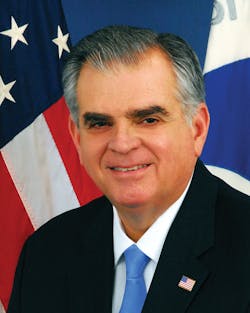
USDOT Opens Bidding for Made-in-America Passenger Rail Cars
The $551 million Request for Proposals to manufacture approximately 130 new bi-level passenger rail cars in America comes from a groundbreaking multi-state effort to jointly purchase standardized rail equipment to be used on Amtrak’s intercity routes in California, Illinois, Michigan, Indiana, Missouri and potentially Iowa. The funding is being provided by the Federal Railroad Administration’s High-Speed and Intercity Passenger Rail Program.
The U.S. Department of Transportation has partnered with the Department of Commerce National Institute of Standards and Technology’s Manufacturing Extension Partnership (MEP) to connect large car builders and more than 34,000 domestic suppliers, and help them retool their production capabilities to meet demand. The MEP connects suppliers with viable business opportunities that may have otherwise gone to foreign suppliers.
The Buy America provision of the RFP requires that all components of the new bi-level cars are built by American workers: with American hands, and with American-produced steel, iron and manufactured goods.
The new uniform standards will drive down lifecycle costs and allow more manufacturers and suppliers to compete, fostering a healthy competition while helping re-establish the U.S. domestic supply chain for passenger rail equipment and meet Buy America goals. The common design also makes it easier to train personnel, stock parts and perform maintenance and repairs, which also reduces costs and increases equipment reliability.
Let the Cooling Begin at Solar-Powered Light Rail Station
At the 3rd St./Washington light rail station in downtown Phoenix, passengers can enjoy the chill of a solar-powered cooling system as they wait for the next train. The system was launched last summer and is being activated earlier than scheduled due to the heat spike.
The district cooling system also air-conditions such prominent downtown facilities as Chase Field, Symphony Hall and the Phoenix Convention Center. The 3rd St./Washington station is a highly trafficked platform thanks to the business of downtown Phoenix, especially during Arizona Diamondbacks’ games.
Funding for the LYNX Blue Line Extension
City of Charlotte Mayor Anthony Foxx, UNC Charlotte Chancellor Dr. Philip L. Dubois, NC Governor’s Piedmont Regional Office Director Budd Berro, North Carolina Department of Transportation Deputy Secretary for Transit Paul Morris, CATS CEO Carolyn Flowers, Charlotte Chamber of Commerce President Bob Morgan and Mecklenburg County Commission and Metropolitan Transit Commission Chairmen Harold Cogdell took part in the celebration on the campus of UNC Charlotte at its Bioinformatics Building.
The State Full Funding Grant Agreement will provide 25 percent of the funding for the LYNX Blue Line Extension from Center City Charlotte to the UNC Charlotte campus. The support also prepares the system to receive a full funding grant agreement of 50 percent of the project costs from the Federal Transit Administration later this year.
The 9.4-mile alignment would run from Uptown Charlotte to the UNC Charlotte campus and include 11 light rail stations and four parking facilities. Construction of the $1.16 billion BLE Project is scheduled to begin fall 2013 with operational service expected in 2017.
Mapping the System
“Los Angeles Metro consistently produces some of the best marketing materials in the industry. We are proud to have been selected by L.A. Metro to assist in their continued efforts of producing top-quality, compelling customer information.” - CHK America President and CEO Rick Wood.
CHK America has been awarded the contract for Cartography Services by the Los Angeles County Metropolitan Transportation Authority (Metro). Under this contract CHK American will once again work with Metro to design and maintain a variety of customer information products. These products include the LA CMTA system map, high-frequency map, rail and bus connections maps and the new Expo Line connections maps and frequency tables, along with other specialty maps requested by Metro.
ITS and Customer Communication
GO Transit, a division of Metrolinx, has chosen Init to deploy a new fleet management system for 242 GO Buses, 47 GO Rail cars and 50 non-revenue vehicles. GO is the regional public transit service for the Greater Toronto and Hamilton Area and carries 61 million passengers a year.
The contract calls for an advanced ITS solution which includes an intermodal CAD/AVL system, on-board mobile data terminals, automatic passenger counting technology, next-stop announcements, in-vehicle variable message signs, real-time vehicle diagnostics and interfaces to existing destination signs, bike rack sensors and wheelchair lift sensors.
Incorporated into the new contract is the feed of real-time bus information to Metrolinx’ online customer information service and their new interactive voice response system. The new system will gather bus and rail real-time locations and predict arrival times for the dissemination of service alerts to travelers and other regional transit agencies.
As part of the second phase of the project, vehicle logic units, mobile data terminals, cellular data communications and audio annunciators will be installed on one coach per train. The vehicle logic unit will integrate with future in-vehicle variable message signs, as well as an on-board security camera system that will be installed in the future. The audio annunciators will be integrated with GO’s existing public address system on all rail coaches to provide automated next rail station announcements in every coach of the train.
Transit’s Past in Photos
The San Francisco Municipal Transportation Agency (SFMTA) announced the completion of the 1906 Earthquake and Fire Photographic collection featured in its online photo archive, its Flickr page at www.historypin.com. Drawing from its vast photographic collection, the SFMTA has selected images to share on the web, including all of its images of the 1906 earthquake and fire. There will also be a separate collection of post-earthquake restoration images, featuring some that are not known to have been published before.
The archive of nearly 30,000 images amassed by the SFMTA includes historical and modern collections with images from the late 19th century through the present. The archive not only has Municipal Railway photographs, but also those from privately owned transit systems that once operated in the city, the United Railroads of San Francisco and its successor, the Market Street Railway.
These images document life on the San Francisco’s streets as well as the growth and evolution of transit on those streets.
Historypin allows viewers of this collection to see the images in the context of a Google Map, and to view some in Street View with the historic image situated over the contemporary street scene. The interactive nature of Historypin encourages the addition of images to the site as well as the sharing of stories that are specific to those images and places.
“As Muni reflects on 100 years of service, it is important to also reflect on the history of San Francisco. As Muni grew, so did San Francisco; you can see that story told in the photographs made available within these galleries.” SFMTA Director of Transportation Edward D. Reiskin
Keeping Rail Workers Safe
Bombardier Transportation has teamed up with the Metropolitan Atlanta Rapid Transit Authority (MARTA) in a demonstration project to enhance the safety of rail transit workers at the track side.
The project was approved by the Federal Transit Administration (FTA) following a request for proposals specifically aimed at improving right-of-way safety for rail transit workers, through innovative use of new and advanced technologies. With this project, the FTA aims to mitigate the risks of accidents for passengers and transit system workers in the United States.
The Bombardier/MARTA demonstration project was chosen among eight proposals submitted to the FTA. The project utilizes Bombardier’s TrackSafe technology. It creates improved location awareness for track workers and train operators through the use of Radio Frequency Identification and other advanced technologies.
“Bombardier’s TrackSafe solution reduces the hazards associated with track-level inspections and maintenance. We are glad that the FTA has approved our project and are honored that MARTA has agreed to partner with Bombardier. Like us, they are strongly committed to the safety of track workers. We look forward demonstrating the advantages of our cutting-edge TrackSafe technology,” said Vice President, Services Business Unit for Bombardier Transportation North America Matt Byrne.
MARTA Assistant General Manager for Safety and Quality Assurance Georgetta Gregory said, “MARTA ranks employee and customer safety as a top priority for our system and we continually seek new technological advances to achieve that goal. We are pleased and proud to be working with Bombardier on this critically important initiative.”
City of Tucson Awards Contract to PTM/Veolia
The city of Tucson Department of Transportation has awarded incumbent Professional Transit Management/Veolia Transportation Inc. (PTM/Veolia) a contract to manage Sun Tran fixed-route operations and Sun Van paratransit services.
Led by General Manager Kate Riley, the Tucson-based PTM/Veolia team will help city leaders reach transit goals and objectives by offering continual improvement in key areas such as technological advancements, sustainability, and customer service. Patrick McGowan will continue as assistant general manager over Sun Van, and Mary McLain will maintain her role as assistant general manager of Sun Tran.
“We value the trust the city of Tucson places in PTM/Veolia,” states Duane Eskierka, Veolia Transportation regional vice president. “The continuation of our long-time partnership allows us to provide solutions that reduce costs, enhance service quality and improve efficiencies.”
The two-year contract also includes operation of the Downtown Loop circulator service, development of a seamless regional fare system, and management of the Special Services Office that sells fare products and evaluates applicants for the city’s Economy Fare Program. The city of Tucson has the option to renew the agreement for up to six additional years.