Parking Strategies for Transit-Oriented Development
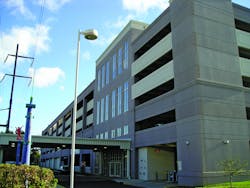
According the 2010 Urban Land Institute (ULI) Infrastructure Report, the United States will add approximately 30 million people – every decade from now through 2050. Baby Boomers are fast becoming empty nesters, and the children of baby boomers are expressing a preference to live in urbanized environments closer to transit, jobs, amenities and entertainment. This generation, according to ULI's John McIlwain and Ronald Terwillinger, could become the first "smart growth generation."
In addition to these significant demographic changes, our nation, awakened by the Great Recession, the Gulf oil spill, and the realization of our excessive consumption, appears to recognize the need for more sustainable, dense, transit-dependent and economically viable communities. For two decades smart growth advocates - including many transit agencies - have championed this type of transit-friendly planning. Now, the preponderance of real estate professionals and some visionary public leaders understand that the sprawling, suburban-focused, auto-dependent development that has defined our nation since World War II is no longer sustainable or desirable. According to Katherine Perez, the executive director of ULI Los Angeles, "TOD projects will be primary choices of private developers and governmental planners for decades to come."
One challenge associated with the planning, design and financial feasibility of transit-oriented development (TOD) and smart growth is the need for structured parking. Due to the necessary density of TOD and the scarcity of available property, structured parking is often the necessary and appropriate solution to consolidate and maximize the land available for development. However, the cost of structured parking can strain a developer's proforma. Further, the mass of the structures, which can approach 50 percent of the built square footage of the development program, can crystallize community and political opposition in many municipalities.
The TOD parking challenge is further magnified when development is planned on transit agency or municipal-owned surface lots that provide commuter parking for regional transit commuters. Typically, where there is strong transit ridership and potential for growth, commuter parking must be fully replaced, even increased, as part of the project to ensure continued access to the transit system.
Transit agencies throughout the United States are planning and undertaking TOD on agency-owned commuter parking lots. These projects increase ridership, enhance the vibrancy and security around station areas, increase non-farebox revenue through the value captured by implementing high density, mixed-use projects, and spur economic development in their host communities. Given the high cost of structured parking, transit agencies, joint development partners, and host communities must implement parking planning and development "best practices" that maximize the use of the TOD parking assets to serve commuters and support development around transit.
Best Practices for Parking Planning and TOD
Municipalities, transit agencies and developers can set the stage for success by employing "best practices" when integrating parking with TOD. These practices must give proper consideration to a number of issues including user comfort, sustainability and economic viability. The following outlines a sampling of parking "best practices."
Effective Parking Planning Policies and Strategies
As a first step to meeting the parking challenge, ensure that parking areas are sized correctly and in accordance with TOD parking principles. TOD planners use various strategies and calculations to measure the necessary amount of parking to support the development program, without overbuild.
Parking requirements for high-density developments located at or near transit should be significantly less than areas not served by transit. TODs help to increase ridership, as well as pedestrian access, by creating density in walkable, transit-friendly locations. Parking ratios and standards should take into account walkability and the convenience and availability of transit options. While parking is still an essential component within a TOD, overbuilt parking structures are a waste of costly infrastructure and occupy valuable land, consume energy, and increase operating costs. To combat unnecessary overbuilds and advocate for proper parking planning, planners must apply appropriate parking ratios, recognizing the reduced need for automobiles within the area.
Applying appropriate TOD parking ratios and requirements, or implementing parking maximums for each land use, is a critical element to "right sizing" parking for TOD. Depending on the proximity and level of service of local transit, standard parking ratios can be significantly reduced. Although some communities, particularly in the suburbs, find the reduction of parking ratios in TOD projects suspect, leading research by the ULI, government, and smart growth organizations indicates otherwise. In many cases, people choose to live and work in a TOD because they seek an environment that is walkable, provides convenient amenities, and offers access to transit.
The integration of housing provides residents with direct access to transit, while increasing ridership. Households with convenient access to mass transit will likely be able to avoid the significant cost of owning and maintaining a second car, which can result in savings of several thousand dollars annually. A Transit Cooperative Research Program (TCRP) study found that TOD residents made 44 percent fewer automobile trips than estimated by the Institute of Transportation Engineers (ITE) manual. The same study recommended reducing parking ratios in residential TODs by as much as 50 percent (Arrington, 2008).
Car sharing services (such as Zip Car) can further eliminate or reduce the need for a primary or secondary car in a TOD environment. These programs provide residents, employees and commuters quick and easy access to a car when needed. In Hoboken, NJ, the city collaborated with Hertz Global Holdings to become the first corporate-city partnership to implement a car sharing program. This program allows residents to rent from a fleet of vehicles on an hourly basis and park them in specially designated spaces throughout Hoboken. For most residents, the cars are easily accessible, and members can reserve their cars in advance.
Utilization of Shared Parking
Shared parking reduces the number of parking spaces required in a development, as well as maximizes the use of limited land resources. Defined as "the use of a parking space to serve multiple land uses without conflict," shared parking strategies can cut structured parking costs significantly by reducing the quality of spaces that need to be constructed. To maximize the impact of this strategy, facilities should be consolidated and shared to the greatest extent possible. The mix of land uses typical in TOD projects provides many opportunities for shared parking. The utilization of the same parking space by multiple user groups (i.e., parking for commuters during the day, and residents or retail patrons in the evening and weekends) maximizes the use of the parking area, reduces the amount of parking needed to be built, and financially supports the facilities' capital and operating expenses (if parking fees apply).
Through the application of shared parking principles for TOD projects, the amount of parking to be built can be reduced, thereby enhancing the project's economic viability, benefits, and economic return. Shared parking also reduces the land devoted to parking, and provides more developable area, open space, and amenities. Consolidating parking for multiple uses allows for the opportunity to increase the area's "sense of place", reduces the cost of developing and maintaining parking, and increases the security and user comfort due to increased user activity.
Effective Parking Structure Design
The planning and design of structured parking within a TOD requires the integration of strategic planning principles. Parking facilities in mixed-use, transit convenient areas serve several user groups, and can provide a "gateway" or a destination for a community. Parking can play an important role not only in encouraging more pedestrian movement at street level, but also in sparking further growth in surrounding areas. Early consideration of parking in the planning process will identify the best opportunities for integrating parking, as well as create the potential for incorporating mixed-use, to utilize potentially limited space more effectively. This strategy can increase activity, as well as architectural appeal and pedestrian scale for the structure, the streetscape, and the entire block or neighborhood. Combined with the implementation of shared-use strategies, this can generate additional turnover, and revenue, and magnify activity on-street.
TOD parking planners should leverage the associated pedestrian activity to create "people places". Given the amount of pedestrians that will come and go from a parking structure, the access and egress areas should be planned and designed as public spaces with adjacent retail and quality hardscape, water, and landscaping elements.
The structure's design will represent the community, the station area and the character of the surrounding neighborhood for decades to come. Thus, appropriate investment and attention should be incorporated into the architecture and façade and public areas of the parking facility. Architectural continuity is a critical component of parking facility design. Pedestrian and vehicular access and exits and sections of the façade may be enhanced with architectural elements that contribute to the neighborhood aesthetic. These elements provide an inviting experience for the many people that will use the parking facility or pass by on the street. Stair and elevator towers also provide opportunities to incorporate attractive architectural features, and should be designed using glass with maximum visual access and exposure to vibrant streets to enhance user comfort and security. Lighting levels may be increased beyond typical levels, and components of the structure may be painted or stained to promote brightness. Passive security measures include clear sight lines, bright and effective lighting, and the elimination of dark areas that provide patrons a high level of user comfort.
Sustainable Design Opportunities
Parking facilities located in TODs can set the standard for sustainable design practices. Parking facilities are by nature a more efficient use of land than surface parking. Densely constructing parking, as well as other buildings, preserves significant portions of land for further development, as well as open space, which can take the form of natural habitat or landscaped plazas and planted green space.
Structured parking facilities located in mixed-use transit-oriented developments can also result in a decrease in vehicle miles traveled (VMT), This decrease occurs by allowing the opportunity to park once and walk to varied destinations, or to utilize transit, rather than driving to multiple locations, each scattered miles apart. Additional sustainable design opportunities include the integration of mixed-use, renewable on-site energy, energy efficient lighting, storm water capture and reuse for wash downs, maintenance, and landscaping irrigation, and bicycle storage facilities, to name a few. Solar arrays can provide the predominant amount of electricity for lighting and other electrical equipment. Operators can offer car-sharing, preferred parking and charging facilities for alternative fuel vehicles, and preferred parking for fuel-efficient vehicles. Finally, incentives for carpoolers such as preferred parking spaces or discounted fees can effectively reduce the number of parking spaces required at a commuter parking facility.
With the implementation and practice of TOD parking strategies, the quality and viability of transit-oriented projects are significantly enhanced. Using appropriate TOD parking ratios, applying parking maximums, utilizing on-street parking and sharing parking reduce the amount of structured parking that needs to be constructed. Reducing parking can result in significant cost savings, both in initial capital outlay for construction and ongoing operational and maintenance costs over the life of the structure.
By applying appropriate TOD parking strategies, fewer parking spaces are needed, resulting in significant capital savings. These savings can be invested in public space upgrades, sustainable practices to reduce future energy consumption or other project enhancements that will improve and sustain the TOD community.
James Zullo, AICP, LEED AP, CAPP is vice president of Timothy Haahs & Associates Inc.