LSTAR: A New Way of Moving for Central and South Texas
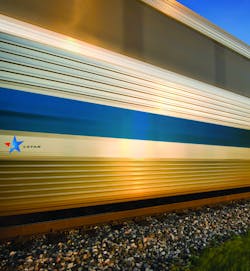
It's a project that many stakeholders, decision-makers, and citizens in central and south Texas believe is long overdue — a regional intercity passenger rail system connecting the cities and towns in the Interstate 35 corridor of the Austin-San Antonio region. Lone Star Rail District (LSTAR) is working to turn that belief into reality with a multi-year plan to not only introduce that new passenger service, but also to support a major improvement in freight rail throughput in the important, nationally significant north-south trade corridor between south Texas and the American heartland.
Growing Congestion
Interstate 35 between Austin and San Antonio is one of the most congested segments of roadway both in Texas and in the nation. It is the only interstate highway that connects Mexico and Canada with the middle of the United States, and it carries an overwhelmingly larger percentage of United States-Mexico trade than any other interstate highway. Because of Texas' position astride this major north-south trade route, transportation issues for Texas have national reach and national significance; in fact, approximately 80 percent of Mexico's trade with the United States and Canada under the North American Free Trade Agreement (NAFTA) passes through Texas, and 75 percent of that trade is transported by truck on I-35. Truck freight traffic in this nationally significant corridor has been growing at a steady rate since the 1990s, with a 400 percent increase from current volumes considered likely by 2030. In practical numbers, it will grow from about 3,000 trucks per day to about 15,000 trucks per day over the next 20 years.
At the same time, the population of the state is growing rapidly as many families relocate to south and central Texas, which enjoys a high standard of living and relatively lower unemployment as compared to many other areas of the United States for a comparatively lower cost. Nearly half of the population of the state lives within 50 miles of the I-35 corridor, making it a crucial link for passenger mobility. The recently released 2010 census shows that three of the five counties that make up the LSTAR service territory — Bexar, Travis and Williamson — are now among the most populous in the state. From 2000 to 2010, Bexar and Travis County grew by 20 and 26 percent respectively, while Williamson County grew by an astounding 67 percent in the same time period, and San Antonio surpassed Dallas as Texas' second most populous city. More than 3 million people now live in the Austin-San Antonio region, according to the census.
The 2010 Texas Transportation Institute Urban Mobility Report ranked Austin third worst in the nation by travel time index, the ratio of travel time in the peak period to travel time at free-flow conditions. San Antonio ranked 32nd worst. That measure and others, such as wasted fuel and congestion costs, are expected to worsen at an accelerating rate as NAFTA volumes and population grow. The resulting demand for freight and passenger transportation will soon overwhelm highway capacity, which cannot be enhanced or increased significantly in the corridor due to physical, environmental and financial constraints.
The current Union Pacific Railroad (UPRR) freight rail corridor between San Antonio and Austin hosts 30-plus "through" freight trains per day that originate and terminate outside of the region plus five to six local freight trains per day that serve customers in the region, mostly rock quarries. The line, which passes through the urban cores of Austin, San Antonio and all of the cities and towns in between, is capacity-constrained and doesn't offer much possibility for large-scale growth for the freight railroad. The presence of so many freight trains moving through the urban cores and downtowns of the cities in the corridor also creates problems for automobile traffic, and exposes the freight railroads to accident risk at the 130-plus highway-rail grade crossings up and down the line.
The lack of modal diversity in the corridor hinders choice and is a tangible and emergent threat to future economic growth in the region. Enter Lone Star Rail District.
A Mulitmodal Solution
Lone Star Rail District, originally dubbed the Austin-San Antonio Intermunicipal Commuter Rail District, was created on paper by an act of the Texas state legislature in 1997. The agency, an independent local government entity, was formally constituted in 2003 when the cities of Austin and San Antonio and the counties of Travis and Bexar voted to join each other in planning the new rail service, which was a condition set in the original legislation. Since that time, membership in the rail district has expanded to include most of the political jurisdictions in the district's service area, the transit authorities in the two keystone cities, Capital Metro in Austin and VIA in San Antonio, and the two rural transit authorities, CARTS and ART. It also includes the region's two major metropolitan planning organizations (MPOs), CAMPO in the Austin area and SA-BC MPO in the San Antonio area. Since its inception, the sole purpose of the agency has been the planning, construction and operation of passenger rail service in the corridor between Austin and San Antonio.
In 2009, the district conducted a market analysis and branding effort. At its conclusion, the analysis offered many insights into the potential market for passenger rail service in the corridor, the most important of which was the discovery that the final product expected by the traveling public is much more than just a commuter service. In fact, many of the trips that the trains could serve are non-work-related. Discoveries such as that one, and the desire to formulate a better identity for the service led to the renaming of the agency to Lone Star Rail District, and the branding of the proposed rail service as the LSTAR.
The planned 117-mile line includes the current UPRR freight corridor, plus two greenfield "extensions" — on the north an alignment based on the former Mo-Kan Railroad right of way, and on the south a route from the west side of downtown San Antonio to south San Antonio. A total of 16 stations are planned, from Georgetown, located north of Austin, to a station at City South, adjacent to the Texas A&M University campus in south San Antonio. Current plans include the use of FRA-compliant rolling stock, most likely diesel locomotive-hauled bi-level coaches with cab control cars for push-pull operation. Maximum operating speed at initial deployment is planned to be 90 mph, made possible by the installation of positive train control and the maintenance of track and roadbed at FRA Class 5 standards. At full build-out, current plans include double track in the entire corridor (with the exception of a short segment in the vicinity of the Colorado River) to bolster reliability, and full centralized traffic control (CTC) dispatching, which will be under the direction of the rail district. Additional infrastructure to support continuing local freight service is also being designed into the project, so that customers in the corridor need not worry about losing their access to the national freight rail network.
A two-tiered service plan is in the works, including a mix of local and express service throughout the service day, seven days per week. Half-hour headways are planned during the morning and afternoon weekday peak periods, with hourly service during the mid-day and evening weekday off-peak periods. The latest train performance calculations, based on a preliminary understanding of the configuration and characteristics of the new line, show that LSTAR express trains operating between the Austin and San Antonio downtown stations and making just two mid-line stops enroute will have a travel time of one hour and 15 minutes, making that service quite time-competitive with automobile travel times between the same end points. In addition, special event service is planned to serve the diverse sporting, cultural and entertainment events and venues featured in many cities along the route, including the annual South by Southwest conference, Austin City Limits music festival, and University of Texas football games in Austin; Wurstfest in New Braunfels; and NBA Spurs games and the River Walk in San Antonio.
Fares are planned to be distance-based, as is typical of regional passenger rail, and a variety of reduced-ride instruments are being considered, including 10-ride tickets and weekly and monthly passes for frequent riders. Special event and "family" fares are also being considered, to encourage "choice" riders to use the system for non-work trips. Fare sales and collections methodology has not yet been set, but the district will be looking at several methods in the near future as the service plan develops, including proof of payment (POP), retail partnerships, smartcards and smartphones. The district has also begun to think about ways to leverage fare policy to encourage the use of the system by students, as the proposed line passes within two to three miles of most of the higher education facilities and institutions in the region, including the University of Texas at Austin, University of Texas-San Antonio, Texas State University in San Marcos, and Texas A&M University in San Antonio. These institutions have a potential travel market of more than 300,000 students, faculty and staff.
The LSTAR is viewed by stakeholders not only as a rational reaction to growth in population and trade, but also as an investment in the economic vitality of the entire region. Peer-reviewed economic benefit studies conducted to quantify the increased value, economic activity and quality of life benefits that directly impact economic development show that LSTAR, through year 2030, would directly contribute to an increase of more than $20 billion in personal incomes, more than $1 billion in state tax revenues, more than $1 billion in regional and local tax revenues, and nearly $1 billion in school district tax revenues.
Urban Freight Rail Bypass
In the fall of 2010, Lone Star Rail District signed a memorandum of understanding with UPRR to study an urban freight rail bypass line intended to provide a new route for the 30+ daily through freight trains that currently operate on the existing UPRR mainline between Austin and San Antonio. The removal of through freight trains from the current UPRR corridor will free up the necessary capacity to establish the LSTAR passenger service.
Upon completion of this new line, it is planned that Lone Star Rail District and UPRR will "swap" ownership of the current corridor and the urban freight rail bypass line. The LSTAR service, local freight service and Amtrak service will operate on the repurposed, improved former freight line that runs through the urban cores of all the cities and towns in the corridor, and UPRR through freight service will operate on the bypass line.
The proposed urban freight rail bypass line will be fully grade-separated, and will conform to UPRR's operational and engineering standards. While the initial build of the bypass will be designed to recreate only the capacity available in the current corridor, environmental clearance will be conducted in such a way so as to allow UPRR to pursue future capacity enhancements as desired and needed. UPRR's ability to carry more freight in the future on trains will contribute greatly to congestion mitigation on I-35 by shifting longer-distance freight shipments from highways to rail, which is a key long-term goal of the effort.
Network Focus
Lone Star Rail has begun regular monthly partnering discussions with the two keystone cities and their respective transit authorities. In Austin, Capital Metro opened its Red Line MetroRail service last year. Ridership has been growing steadily in 2011 since the implementation of some key service and fare changes. The city of Austin has recently begun environmental studies on a new urban rail system which is intended one day to serve as a downtown circulator, linking a number of important downtown destinations to the Red Line, LSTAR and Austin-Bergstrom International Airport. In San Antonio, VIA Metropolitan Transit is in the midst of its long-range planning process, dubbed "My Way SA," which includes provisions for future high-capacity transit (bus rapid transit, streetcar and light rail) which will connect with the LSTAR service at three locations in the San Antonio region, in addition to bus service improvements.
In both cities, the focus is on creation of a seamless network of rail or other high-capacity transit modes which will link LSTAR with local origins and destinations. Deft and cooperative handling of this "last mile" issue is important in generating and maintaining ridership for all of the systems. The partners in these discussions strongly believe that emphasis on network connectivity improves the performance, usefulness and ultimate attractiveness of all of the systems. Various measures, such as fare integration, schedule coordination, and joint branding and marketing are all under consideration. In a similar fashion, LSTAR will coordinate with any future high-speed rail service to provide the "last mile" connectivity for HSR customers arriving from outside the Austin-San Antonio region, and as a means for central and south Texas customers to access HSR.
Status and Future Plans
Lone Star Rail is currently conducting environmental and preliminary engineering studies on the proposed LSTAR passenger line, moving toward the completion of an Environmental Impact Statement and securing of a Record of Decision from the federal government in a two to three-year time frame. Concurrently, the district is working on an Alternatives and Fatal Flaw Analysis on the urban freight rail bypass line to identify a preferred technical alignment alternative by October of this year. Environmental studies of that alignment will start soon after completion of the analysis and selection of the preferred alternative.
Financial planning is ongoing, and the district is currently in discussions with the cities and other jurisdictions in the corridor regarding the provision of operating and maintenance (O&M) funds for the service. The securing of reliable O&M funding sources is a necessary step for the district to pursue and leverage the mix of federal, state, local and private funding, financing, and capital that will be necessary to begin the next major phase of the project — final design and construction. To that end, the district has set a target of the end of 2011 to have the required agreements in place with local jurisdictions defining their financial commitments to the continuing operations of the future system.
Joseph Black is the rail director/operations manager for the Lone Star Rail District.