Alstom Trains Use New PCB Design for ATC System
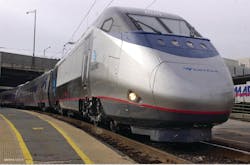
Alstom Signaling Inc. in Rochester, N.Y., is continually striving to improve the safety of rail transport systems. Recently the company began an upgrade of its onboard Micro Cabmatic automatic train control system typically used on transit and commuter rail systems. This project dovetailed with infrastructure updates and changes to optimize manufacturing operations at its Rochester facility.
New Backplane Design
Originally the equipment for this ATC system was located entirely on the wayside, but now much of the electronics are carborne installations. This modular microcomputer-based system consists of one or more subsystems that provide train operations, vital safety control functions and two-way communications between a train and wayside devices. The heart of each ATC subsystem is an onboard microcomputer. However, the interconnection of various electronic boards was using a lot of cables and connectors. Cables are prone to wear spots and various maintenance problems. So, a major objective of the Alstom upgrade project was to reduce the cabling by going to a backplane design that allows direct insertion of various functional cards, and takes less space than cable connections.
A backplane can reduce wiring errors, make troubleshooting much easier and simplifies maintenance. It also tends to make the system more tamperproof. In addition, a backplane provides greater flexibility and ease in making changes to the design of functional cards when upgrading the ATC system.
A crucial consideration in the adoption of a backplane design was the fact it required different technology and manufacturing equipment than Alstom currently had in-house. After careful consideration of the cost and timing implications, Alstom decided to investigate outside vendors.
Vendor Selection
The first step in vendor qualification is usually looking for one with expertise and a successful history in supplying the product you need. In the case of a computer backplane, the vendor needs experience in the design and manufacture of boards that accommodate high-speed digital signals without excessive signal latency and pulse distortion. Beyond board engineering, the vendor must have cost-effective manufacturing and test facilities that ensure reliability in the finished assemblies.
In the case of the Micro Cabmatic ATC backplane boards, Alstom wanted to retain control of the design process, just as it did with the PCBs produced in its own plant. It also wanted to create and retain ownership of the board artwork, which it could then send out for bids from qualified vendors. This requires a close working relationship between engineers at Alstom and its vendors.
Key characteristics of a viable backplane vendor include:
- Backplane system design, simulation and validation
- Design and manufacture of the connectors and application machines
- Overall system integration and backplane application expertise
- Careful management of its supply chain
- Component and connector assembly and inspection
- Full electronic and functional testing
- Vertical integration (racks, enclosures, power supplies, wiring, etc.)
- Value engineering (cost effectiveness, design improvements, production engineering)
- Full documentation of its entire engineering, manufacturing and quality control systems
Critical Design Details
Based on Alstom’s own experience in the production of PCBs, its engineers had some definite ideas about the characteristics of a good backplane board. In addition to a cost-effective design, it wanted to be sure it had a robust board that would stand up to the rigors of rail service. This of course meant having reliable card connectors and robust connections when they are installed on the backplane, which is true of all the other components. A critical detail was to add a conformal coating that would improve the backplane’s resistance to environmental conditions.
Initially, it was thought the conformal coating would require masking of board through-holes to ensure good electrical contacts when connectors and other components are installed. Alstom’s RFQs to board vendors included a specification for the coating material and through-hole masking. However, one of the vendors, Harting of North America suggested an alternative: no masking, plus components and connectors with press-fit pins designed to cut through the conformal coating to make electrical contact with the printed circuit board metal traces.
This may not sound as robust as, for example, press fitting or inserting and reflow soldering components before coating. However, “press-fit after coating” technology has proven to be highly reliable in military and telecommunications equipment used under severe conditions.
There is no question that conformal coating improves a PCB’s resistance to environmental conditions. Applying it before component insertion protects PCB traces while allowing easier troubleshooting and repair if a component fails. However, Alstom’s foremost concern is equipment reliability and train safety, followed closely by designs that allow cost-effective manufacturing.
When Harting received Alstom’s RFQ for the backplane board, its engineers saw opportunities to improve the board’s layout, reliability and cost structure. Based on Harting’s experience supplying similar boards in a wide range of high-reliability applications, its engineers proposed the use of connectors and other components with press-fit pins that allow conformal coating before insertion. These pins have a cross-section with sharp corners that not only penetrate conformal coatings, but also cut through the PCB metallization oxide layer to make reliable electrical contacts.
Alstom’s specs called for a urethane coating material that has excellent adhesion properties to provide a high level of protection for the PCB solder mask. This was no problem for the pin design suggested by Harting, which can cut through both urethane and acrylic coatings.
Besides creating a low resistance contact, this type of pin has tremendous reliability benefits. After the coating is penetrated by these pins, it reseals around them, and thereby increases the environmental protection for all those component connections. Essentially, the board is completely sealed.
Another benefit of the specifications proposed by Harting was the opportunity to create a PCB with narrower metal traces. This allows higher component density and a smaller board size. Ultimately, this has a favorable impact on the end equipment design and its cost structure.
Final Step – Testing
To be cost-effective, complex backplanes must be assembled with automated component insertion equipment. This requires equally complex test equipment. Regardless of board design and component installation technology, a vendor must supply a 100 percent tested, ready-to-run assembly. Board tests should include:
- Automated optical inspection (AOI) for proper component insertion, etc.
- Electrical continuity and isolation
- Resistance, capacitance and inductance measurements
- High frequency signal integrity analysis
- Electromagnetic compatibility (EMC)
- Mechanical integrity of connectors and other assembly components
- Climatic and environmental tests, including vibration and shock
- Functional testing/simulation
Ultimately, Alstom’s selection of its backplane vendor was strongly influenced by the press-fit assembly and testing capabilities at Harting’s Elgin, Ill., value added business (VAB) facility. Its automatic presses are a speedy way to insert components, and every insertion stroke is measured and recorded for proper pressure and pin insertion depth.
The backbone for the company’s test capabilities is its RoBAT automated backplane tester. This test system combines electrical, mechanical and optical measurements in a single automated machine that covers the entire backplane fault spectrum at the assembly stage.
The RoBAT S1 is the only fixtureless backplane tester Harting found to have commercially realistic test times. In addition, fixturing costs are a tiny fraction of the bed-of-nails design that has long been a staple of the industry. Besides comprehensive electrical testing, it has both AOI and co-ordinate measurement (CMM) capabilities, which are essential since more than 50 percent of all faults found on assembled backplanes are non–electrical. These capabilities make sure all components are in the proper places, pins are inserted far enough into the board, and there are no bent pins.
The RoBAT can test virtually any size connector or board, from fine pitch signal connectors to power connections. Tens of thousands of test points, requiring all the measurements mentioned above, can be tested in less than 15 minutes. Moreover, its tooling (fixture) costs are typically less than $1,000, and the changeover time for a new product usually takes less than five minutes.
All this contributed to Harting-VAB’s ability to deliver Alstom’s first backplane prototypes within seven days of receiving the board layout engineering files. Production is taking place in this same ISO and IPC-A-610 certified facility. The board design and production has been so successful that Alstom made “press-fit after coating” the standard for all its backplanes.
Frank Ball is a key account manager for Harting of North America. Eric Nickerson is a product manager for Harting Integrated Solutions.